







A New Star in India's Space Saga
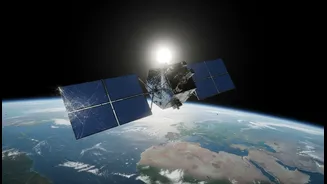
Mission Drishti was not just another satellite; it was a landmark achievement for India's burgeoning private space industry. Developed by the Bengaluru-based startup GalaxEye, it was hailed as the world's first OptoSAR satellite. At approximately 190
kg, it also held the title of India's largest privately developed Earth observation satellite. Launched on May 3, 2026, from California aboard a SpaceX Falcon 9 rocket, the mission represented a significant leap, moving beyond government-led programs to showcase the innovation brewing in the nation's private sector. The project, brought to life by alumni from IIT Madras, drew praise from across the country as a symbol of 'Aatmanirbhar Bharat' in cutting-edge technology.
The Promise of an All-Seeing Eye
The satellite's core innovation was its OptoSAR technology, a revolutionary fusion of two distinct imaging systems. Traditional optical satellites capture clear, colour images but are rendered useless by clouds, smoke, or darkness. Synthetic Aperture Radar (SAR) can pierce through these obstacles, but its data is often complex and difficult for non-experts to interpret. Mission Drishti combined both on a single platform, designed to capture optical and radar images of the same spot simultaneously. This unique capability promised all-weather, day-and-night surveillance, a game-changer for a tropical country like India, which frequently experiences heavy cloud cover during monsoons. Its potential applications were vast, ranging from strategic border surveillance and disaster management during floods to precision agriculture and infrastructure monitoring.
A Near-Perfect Performance in Orbit
Following its successful launch, Mission Drishti began the most delicate part of its journey: the Launch and Early Orbit Phase (LEOP). This is where the satellite wakes up, deploys its systems, and stabilizes itself. The GalaxEye team watched as their creation performed beautifully. The satellite successfully established communication with its ground control centre in Bengaluru, deployed critical components, and executed attitude control maneuvers. These early successes were a powerful validation of GalaxEye's in-house technology and operational capabilities. The mission completed a major portion of its planned LEOP, proving the core design and engineering were sound and marking the completion of the first crucial steps in its journey.
A Mission Cut Short by a Solar Storm
Tragedy struck during the final stage of the LEOP. On July 7, 2026, GalaxEye announced that the mission had encountered a severe anomaly. The culprit was a geomagnetic solar storm, a powerful eruption from the sun that floods space with radiation. The initial analysis from the company suggests that this intense radiation likely damaged a critical onboard system. Communication with the spacecraft became intermittent before being lost entirely. While the team immediately began recovery efforts, the company stated that the likelihood of re-establishing contact with the satellite was low, marking a heartbreaking end to a promising mission.
Learning from Loss and Looking Ahead
While the loss of Mission Drishti is a significant setback, the story doesn't end there. The founders of GalaxEye have emphasized that the mission, though brief, was not a failure. It provided invaluable engineering data and crucial insights into operating advanced spacecraft in the harsh environment of space. The satellite's successful performance during the initial LEOP validated the company's core technologies and operational processes. GalaxEye is already incorporating the lessons learned into its next generation of spacecraft. The company has affirmed its commitment to the future, announcing plans to launch two new and improved OptoSAR satellites within the next 24 months, accelerating its efforts to bring more of its supply chain and manufacturing in-house to enhance reliability.