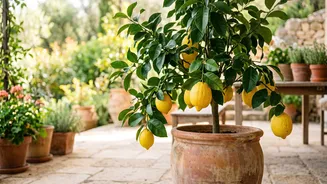







The Right Foundation: Pot and Soil
Your lemon tree’s success starts from the ground up. Choosing the right pot is critical. Opt for one with plenty of drainage holes to prevent water from pooling at the roots, which can lead to rot. Terracotta pots are an excellent choice as they are porous
and allow soil to breathe. Start with a pot that is a few inches wider than the root ball and plan to repot into a slightly larger container every couple of years. The ideal soil is a well-draining, slightly acidic mix. While you can find potting mixes specifically formulated for citrus trees, you can also create your own by blending regular potting soil with perlite or coarse sand to improve drainage. When potting, ensure the graft union—the noticeable bump low on the trunk—stays well above the soil line.
Let There Be Light
Lemon trees are sun worshippers. To thrive and produce fruit, your plant needs at least six to eight hours of direct, bright sunlight every day. The best spot is typically a south-facing balcony, patio, or window where it can soak up the maximum amount of light. If your plant doesn’t get enough sun, it may grow lanky and struggle to produce flowers, let alone fruit. If you move your plant between indoors and outdoors, be sure to acclimate it gradually over a week or two to prevent the leaves from getting scorched by the sudden change in light intensity.
Watering Wisely
Overwatering is one of the most common mistakes in caring for potted lemon trees. These plants prefer soil that is consistently moist but never soggy. A good rule of thumb is to check the soil with your finger; if the top one to two inches feel dry, it’s time to water. When you do water, do it thoroughly. Pour water slowly until it runs freely from the drainage holes at the bottom of the pot. This ensures the entire root system gets a drink and helps flush out any accumulated salts from fertilizers. After watering, be sure to empty the saucer beneath the pot so the tree is not left sitting in a puddle.
Feeding Your Tree for Fruit
Potted plants have limited access to nutrients, so regular feeding is essential for a healthy, fruit-bearing lemon tree. During the active growing season, from spring through summer, you should fertilize your tree every four to six weeks. Use a balanced fertilizer specifically designed for citrus trees, which will contain the necessary nitrogen for leafy growth as well as other micronutrients like iron and zinc. A formula with a higher nitrogen ratio, such as 2-1-1 or 3-1-1, is often recommended for container-grown citrus. Reduce or stop fertilizing during the autumn and winter when the plant’s growth naturally slows down.
Pruning for Shape and Health
Pruning helps maintain your lemon tree’s size, encourages a fuller shape, and improves air circulation, which can reduce the risk of disease. The best time to prune is in the late winter or early spring, just before the new season’s growth begins. Your main goal should be to remove any dead, damaged, or crossing branches. You can also trim the tips of branches to encourage the plant to grow bushier rather than just taller. Aim to create an open, vase-like shape that allows sunlight to reach all parts of the tree. Avoid removing more than a quarter of the tree’s branches at any one time to prevent stressing the plant.
Keeping Pests at Bay
Potted lemon trees, especially those kept indoors, can attract common houseplant pests like spider mites, aphids, mealybugs, and scale. Regularly inspect the leaves and stems, paying close attention to the undersides of leaves where pests often hide. If you spot an infestation, act quickly. Many common pests can be managed by spraying the plant with insecticidal soap or neem oil. For scale insects, which look like small brown bumps, or cottony mealybugs, you can spot-treat them by dabbing them with a cotton swab dipped in rubbing alcohol.