



The Golden Rule: Safety First with Solar Filters
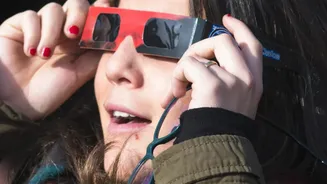
Before discussing any lens or setting, this point is non-negotiable: you must use a certified solar filter on the front of your lens. Pointing a telephoto lens directly at the sun without one will cause permanent damage to your camera's sensor and, far
more importantly, your eyes. Standard neutral density (ND) filters are not strong enough. You need a filter that meets the ISO 12312-2 international safety standard. This filter must remain on your lens during all partial phases of the eclipse. It is only safe to remove the filter for the brief moments of totality, when the moon completely obscures the sun. As soon as the sun begins to reappear, the filter must go back on immediately.
Choosing Your Focal Length
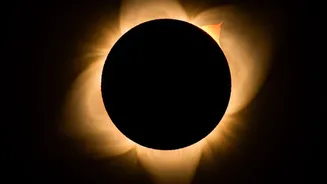
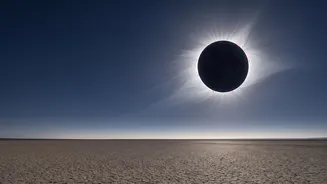
The 'best' focal length depends on the photo you want to create. For eclipse photography, longer is generally better. Lenses in the 400mm to 600mm range are often considered the sweet spot. This range provides a large image of the sun, allowing you to capture detailed features of the corona during totality. A 200mm lens can work, but the sun will appear quite small. Lenses longer than 600mm, such as 800mm or more, offer incredible magnification but are much more challenging to keep stable and properly aimed at the moving sun. For many photographers, a versatile zoom like a 150-600mm provides an excellent balance of reach and flexibility.
Stability Is Everything
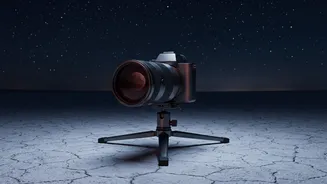
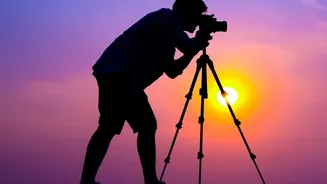
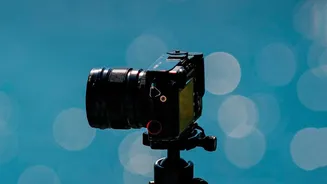
With the extreme magnification of a telephoto lens, the slightest vibration can turn a sharp image into a blurry mess. A sturdy, reliable tripod is not optional; it is essential equipment. The heavier your lens, the more robust your tripod needs to be. To further minimize shake, avoid pressing the shutter button with your finger. Instead, use a remote shutter release or your camera’s built-in self-timer (set to a two-second delay). Many photographers also recommend turning off your lens or camera body's image stabilization (often labeled IS, VR, or VC) when mounted on a tripod, as the system can sometimes introduce its own vibrations while trying to correct for non-existent movement.
Nailing Your Camera Settings
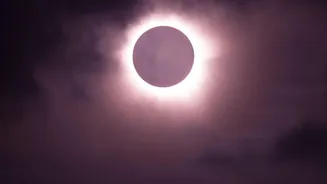
Switch your camera to Manual (M) mode for full control. For focusing, use manual focus, as autofocus systems will struggle to lock onto the sun. Use your camera's Live View screen, magnify the image of the sun (with the filter on), and carefully adjust the focus ring until the edge of the sun is perfectly sharp. For exposure, start with a low ISO of 100 or 200 and an aperture between f/5.6 and f/8. Your shutter speed will change dramatically. During the partial phases (with the filter on), you'll likely use a fast shutter speed. During totality (with the filter off), you must bracket your exposures. This means taking a rapid sequence of photos at many different shutter speeds—from very fast to very slow (1/1000s to 1 second or longer)—to capture the bright inner corona and the faint, wispy outer corona.
Practice Makes Perfect
An eclipse happens quickly, and totality can feel even faster. You don’t want to be fumbling with gear during those precious few minutes. Rehearse your entire process several times before the event. On a clear day, take your camera, telephoto lens, and solar filter outside and practice. Find the sun, mount your camera, and dial in your focus. Practice finding the correct exposure for the filtered sun. Go through the motions of safely removing and replacing your solar filter. The more you practice, the more your actions will become muscle memory, freeing you up to experience the awe of the eclipse while still capturing incredible photographs.