




What Exactly Is Colour-Blocking?
At its heart, colour-blocking is the practice of using two or more solid blocks of colour next to each other on a surface. Instead of blending, the colours have clean, defined edges, making each block read as a distinct shape. Think of it as painting
with shapes, where large, intentional blocks of colour do the work that a piece of art or a busy pattern might otherwise do. This technique has its roots in early 20th-century art movements, like the work of Piet Mondrian, which is why it continues to feel modern and intentional. It’s not about just painting one wall a different shade; it’s about creating a composed, graphic statement directly on your walls.
More Than Just an Accent Wall
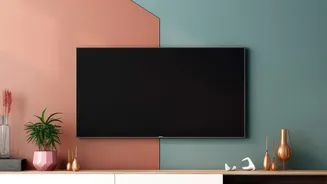
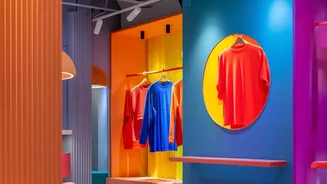
While an accent wall involves painting one entire wall a different colour, colour-blocking is often more dynamic. It can be confined to a single wall or even spill across corners, ceilings, and floors. You might paint a large circle behind your sofa, a wide vertical stripe to make a ceiling feel higher, or a horizontal band to make a narrow room feel wider. This technique can also be used to define a specific area in an open-plan home, like creating a colourful backdrop for a home office nook or a reading corner. The shapes themselves—arches, circles, triangles, and rectangles—become the art.
Choosing Your Perfect Palette
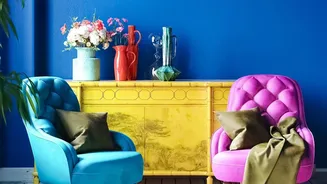
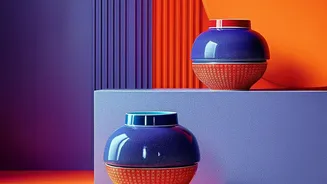
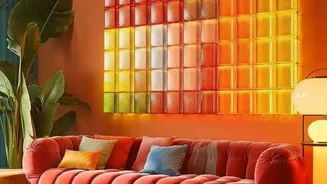
The key to successful colour-blocking is a thoughtful palette. A good rule of thumb is to stick to two or three colours plus a neutral to avoid the space looking too busy. You can create high-impact looks using complementary colours (opposites on the colour wheel, like blue and orange), which make each other appear more vibrant. For a more subtle and harmonious feel, you can use different tones of the same colour, like a deep navy with a light sky blue. For Indian homes, earthy and neutral tones like beige, olive green, and muted orange can bring warmth, while rich jewel tones can add a touch of drama and elegance. The goal is to balance the intensity of your chosen colours so they work together without overwhelming the room.
Embrace Geometric and Abstract Shapes
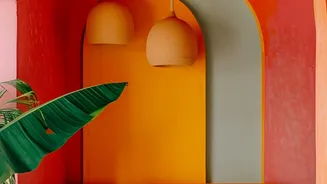
The fun of colour-blocking lies in the endless creative possibilities with shapes. Geometric patterns are a popular choice. Simple triangles can be arranged in a dynamic pattern, while bold stripes—whether vertical, horizontal, or diagonal—can create a sense of movement. Painted arches have become a major trend, often used to frame a bed’s headboard or a stylish console table, creating a soft yet architectural feature. You can also move into more abstract territory, painting free-form shapes that overlap to create a wall that doubles as a piece of modern art. This approach is far more integrated than hanging a framed picture, as the wall itself becomes the masterpiece.
A Budget-Friendly DIY Project
One of the most appealing aspects of colour-blocking is that it's an affordable and beginner-friendly DIY project. Unlike a full remodel, all you really need are a few tins of paint, painter's tape, a level, and a pencil. The process involves careful preparation: planning your design, marking it out on the wall, and meticulously applying painter's tape to get those crisp, clean lines that are the signature of this style. While you can certainly hire a professional for more complex designs, simple geometric blocks, split-wall effects, and arches are achievable for even novice painters, offering a high-impact transformation for a minimal investment.