




A Cosmic Mystery Unfolds
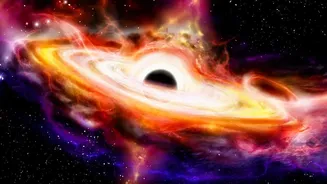
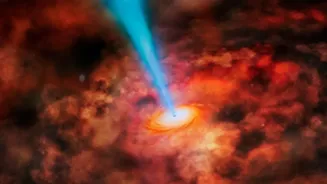
Deep in the heart of a galaxy named Markarian 1018, something strange has been happening. For decades, astronomers watched its core glow with the ferocious intensity of an Active Galactic Nucleus (AGN), a beacon powered by a supermassive black hole feasting
on gas and dust. Then, suddenly, it dimmed. This 'changing-look' behaviour was a puzzle, but one possible answer is as dramatic as it sounds: the central black hole is no longer at the centre. Observations from multiple telescopes, including NASA's powerful Swift Observatory, have provided clues pointing to a cosmic event of immense power that may have knocked the black hole from its throne.
The Prime Suspect: A Black Hole Merger
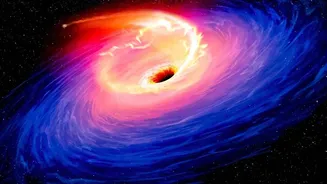
The leading theory for this displacement sounds like something from science fiction: a gravitational slingshot. Scientists believe that Markarian 1018 is the product of a merger between two smaller galaxies. When this happened, it's likely that the supermassive black holes from each galaxy also began a long, spiralling dance toward each other. The final, violent merger of two black holes is one of the most powerful events in the universe. This process does not always happen symmetrically. If the two black holes have different masses or spins, the gravitational waves they emit can be stronger in one direction, creating a powerful 'kick' that sends the newly formed, larger black hole recoiling in the opposite direction.
Swift's Multi-Wavelength View
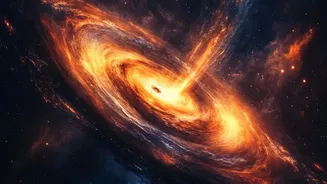
This is where NASA's Neil Gehrels Swift Observatory becomes a crucial detective. Swift can observe the universe in X-ray, ultraviolet, and optical light simultaneously. This multi-wavelength capability is essential for understanding complex phenomena. For an AGN, the intense heat from the accretion disk—the swirl of matter falling into the black hole—glows brightly across these spectrums. By tracking how the light from Markarian 1018 faded, Swift helped confirm that the black hole wasn't just being temporarily obscured by a gas cloud. Instead, the dimming suggests the black hole has been starved of its fuel source, which is exactly what would happen if it were kicked away from the dense gas clouds at the galactic centre.
A 'Naked' and Wandering Giant
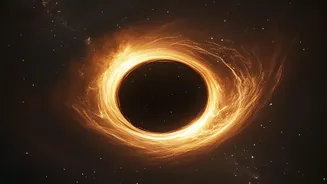
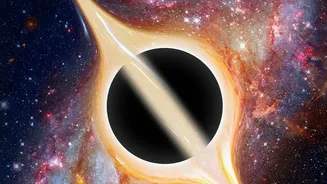
A black hole that has been ejected from the galactic core is essentially a 'naked' or 'wandering' black hole. Without a steady supply of gas to consume, its AGN flickers and dies out, making it nearly invisible. Spotting such an object is incredibly difficult. However, occasionally a lone star may drift too close to one of these wandering giants. When that happens, the star is torn apart in a cataclysmic event known as a tidal disruption event, creating a brilliant flare of light that can briefly outshine an entire galaxy. Swift has been instrumental in spotting these flares, which act as cosmic lighthouses, revealing the presence of otherwise hidden black holes far from their expected homes.
Rewriting the Rules of Galaxy Evolution
The discovery of off-centre and wandering black holes has profound implications. It provides tangible evidence for the reality of gravitational wave 'kicks' from black hole mergers, a phenomenon predicted by Einstein's theories. It also shows that the centres of galaxies can be much more dynamic and chaotic places than once thought. A galaxy that loses its central black hole could evolve very differently. These observations, pieced together with data from Swift and other observatories, are forcing astronomers to reconsider the life cycles of galaxies and the powerful, unseen forces that shape them across billions of years.