





A Major Push for Affordable Travel
The Amrit Bharat Express is designed to serve the common person, particularly those undertaking long journeys for work, education, or family visits. Unlike premium services like the Vande Bharat Express, these trains are fully non-AC, featuring sleeper
and unreserved general coaches to keep fares accessible. The Railway Board's recent approval of seven new routes signals a significant commitment to strengthening rail links between major cities and smaller towns across northern, central, western, and southern India. These services are intended to provide a modern travel experience without the high cost, targeting a segment of passengers who need reliable long-distance options.
The Seven New Routes at a Glance
The newly approved services will connect key hubs across multiple states, enhancing mobility for millions. The routes are: Dhanbad to Coimbatore: This service will connect Jharkhand and Tamil Nadu, passing through major stations like Gaya, Jabalpur, Nagpur, and Salem. Gorakhpur to Delhi: A weekly service providing another link between eastern Uttar Pradesh and the national capital, with stops at Basti, Gonda, and Moradabad. Gorakhpur to Bandra Terminus (Mumbai): This weekly train will connect Gorakhpur to Mumbai via cities like Kanpur, Agra, Kota, and Surat. Prayagraj to Udhna (Surat): This weekly train will link Prayagraj in Uttar Pradesh with Udhna in Gujarat, stopping at Agra, Kota, and Vadodara. Prayagraj to Lokmanya Tilak Terminus (Mumbai): Providing another connection to Mumbai, this train will run via Satna, Jabalpur, and Itarsi. Subedarganj to Lokmanya Tilak Terminus (Mumbai): This weekly service will connect Subedarganj (near Prayagraj) to Mumbai through stations like Satna, Jabalpur, and Nasik Road. Charlapalli (Hyderabad) to Gorakhpur: This train will link Telangana to Uttar Pradesh via Bhopal, Jhansi, and Lucknow.
What Makes Amrit Bharat Different?
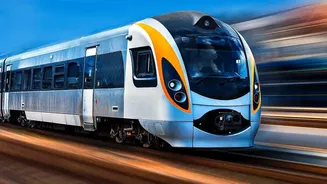
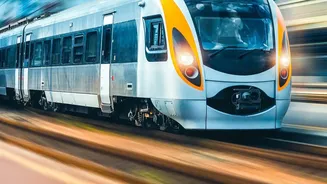
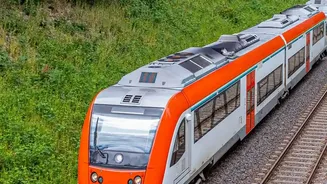
The Amrit Bharat trains are not just about low fares; they also incorporate modern technology for a better journey. A key feature is the 'push-pull' configuration, where locomotives are placed at both ends of the train. This technology provides faster acceleration and deceleration, reducing travel time by eliminating the need for engine reversals at terminal stations. The coaches are jerk-free LHB (Linke Hofmann Busch) models with semi-permanent couplers for a smoother ride. Fully sealed gangways between coaches enhance safety and reduce noise, making for a more pleasant travel environment.
Enhanced Comfort and Amenities
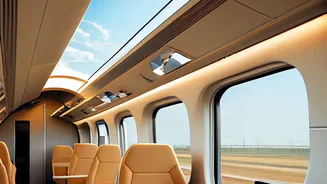
Inside, the coaches are designed with passenger comfort in mind for long hauls. The sleeper berths and seats are cushioned and have an improved ergonomic design. Each coach features modern, hygienic bio-vacuum toilets with sensor-based taps, and some include an automatic odour control system. For the convenience of passengers, there are mobile charging points for every seat, foldable snack tables, and bottle holders. The flooring has radium illumination strips for better visibility at night, and CCTVs are installed for enhanced security. These upgrades represent a significant improvement over conventional non-AC coaches.
Fare Structure and Booking
Affordability is the cornerstone of the Amrit Bharat Express. The fare structure is designed to be transparent and budget-friendly, with no dynamic pricing, which means prices do not surge based on demand. The cost is roughly comparable to that of other Mail/Express trains for sleeper and general classes. For example, a journey of 1,000 kilometres in a sleeper coach costs approximately ₹500. The minimum chargeable distance for sleeper class is 200 km, while for the second-class unreserved coaches, it is 50 km. Tickets can be booked through the standard Indian Railways channels, including the IRCTC website and reservation counters.