




Decoding the Digital Crystal Ball
Scientists at the Indian Institute of Tropical Meteorology (IITM) in Pune have used the latest generation of global climate models, known as CMIP6, to look into India's ecological future. These are the same sophisticated tools used by the Intergovernmental
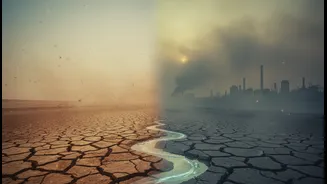
Panel on Climate Change (IPCC) to understand how our world is changing. The researchers specifically modelled a 'high emissions scenario' (SSP5-8.5), which represents a future where the world continues to rely heavily on fossil fuels. This scenario projects what would happen to our landscapes if aggressive climate action is not taken, providing a crucial, if sobering, glimpse of the decades to come.
More Green, But Less Healthy?
At first glance, the results seem positive. Under a high-emissions future, the total amount of carbon stored in India's vegetation is projected to increase by as much as 97% by the year 2100. This 'greening' effect is driven largely by two factors: increased carbon dioxide in the atmosphere, which can act like a fertiliser for plants, and projections of higher rainfall across many parts of the country. However, the IITM scientists are quick to issue a strong warning: this is not the good news it appears to be. They stress that this overall increase in biomass hides a dangerous trend of weakening ecosystems and growing vulnerability.
An Uneven and Unsettling Picture
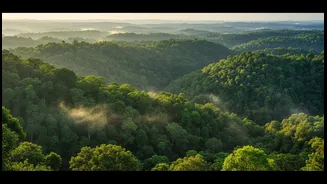
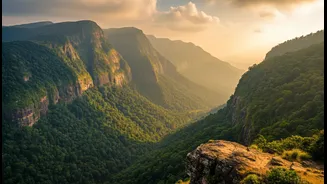
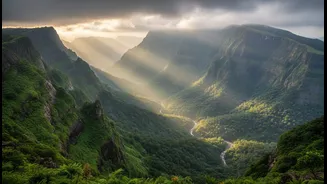
The projected greening is not uniform across the country. The largest gains in vegetation and carbon storage are forecast for India's desert and semi-arid zones, such as in Rajasthan and Gujarat. In contrast, the nation's most vital and carbon-rich ecosystems—the dense forests of the Western Ghats, the Eastern Himalayas, and the Northeast—are projected to see only modest increases. According to the researchers, this slow growth in traditionally lush areas is a red flag. It doesn't signal healthy expansion; instead, it points to a state of ecological stress and declining forest health, making these critical biomes more vulnerable to climate shocks.
The Danger of a Weaker Forest
The problem isn't the amount of green, but its quality. The projections suggest a potential shift from robust, diverse forests to less stable ecosystems like scrublands. A forest is more than just trees; it is a complex system that regulates water cycles, supports immense biodiversity, and prevents soil erosion. When a dense forest ecosystem becomes vulnerable or is replaced by simpler vegetation, it loses its resilience. Its ability to buffer against droughts, fires, and extreme weather weakens. Scientists warn that while higher temperatures and CO2 might boost growth in some areas, they also increase moisture stress and other risks that can ultimately reverse any gains and lead to forests releasing carbon instead of storing it.
A Warning from the Himalayas
The changes predicted by the models are not just a distant future possibility; they are already beginning to unfold. In the Himalayas, scientists have observed a clear upward shift of vegetation, with plants and shrubs moving to higher altitudes as the region warms and snow depth decreases. This real-world evidence validates the concerns raised by the IITM studies. The Himalayas, which are crucial to India's water security, are experiencing rapid changes that threaten their unique biodiversity and the stability of the entire region. This shift serves as a stark, present-day example of what happens when ecosystems are pushed beyond their limits.
Why This Matters for Every Indian
The health of India's forests is directly linked to the well-being of its people. These ecosystems play a fundamental role in regulating the monsoon, which is the lifeblood of our agriculture. Declining forest health in the Western Ghats and Himalayas could disrupt rainfall patterns and threaten water security for millions. Weaker forests also mean a higher risk of landslides and floods, putting communities at risk. The IITM research makes it clear that we cannot afford to be complacent about a 'greener' India if that green is fragile and conceals a fundamental weakness in our natural defences against climate change.