




The Truth About Turbulence
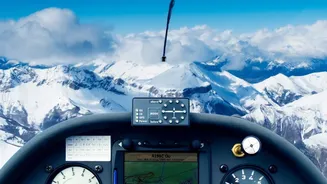
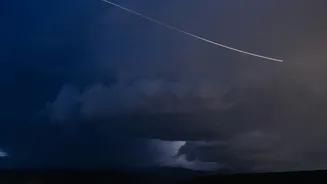
The most common reason for a sudden jolt or drop is turbulence. It's not a sign of engine failure or a problem with the plane. Turbulence is simply unstable, churning air caused by weather fronts, jet streams, or even air flowing over mountains. An aircraft
flying through it is like a boat on choppy water; it gets bumped up and down by these invisible air currents. While it can feel dramatic to passengers, the actual altitude change is often surprisingly small, sometimes less than 20 feet, even though it feels like much more. The pilots are not fighting for control; the plane is simply riding the waves of the air. Modern aircraft are built to withstand forces far greater than what even severe turbulence can dish out.
Debunking 'Air Pockets'
You've likely heard the term 'air pocket' used to describe these sudden drops. It's a misleading phrase that can conjure images of a plane falling through a hole in the air where there is nothing to support it. This isn't what happens. Air is a fluid, and while its density can change, there are no empty pockets in the sky. The term is a holdover from early aviation and is just another name for downdrafts or areas of descending air. When a plane hits a downdraft, it is pushed downward by the moving air, creating that sinking feeling. The plane doesn't fall out of the sky; it's simply carried down briefly by the air current before its wings continue to generate lift and maintain flight.
A Routine Request from the Ground
Sometimes, a rapid descent is not caused by weather at all, but is a deliberate and controlled maneuver ordered by Air Traffic Control (ATC). Our skies are like busy, multi-lane highways. To keep thousands of flights safely separated, controllers at facilities like Air Route Traffic Control Centers (ARTCCs) manage aircraft in specific sectors and at different altitudes. A controller might instruct a pilot to descend to a lower altitude to make way for another aircraft passing overhead or to sequence the plane for its eventual landing approach. These descents can be quicker than the slow, gradual descent you experience at the very end of a flight, but they are a perfectly normal part of managing a crowded airspace.
Following the Flight Plan
Every commercial flight follows a pre-determined flight path that includes specific altitudes for different legs of the journey. To save fuel and avoid bad weather, a flight might be planned to cruise at 35,000 feet for one portion and then step down to 31,000 feet for another. Pilots and their autopilot systems will initiate a descent to reach this new planned altitude. To a passenger, a prompt descent to a new cruising level can feel abrupt, but for the flight crew, it's just business as usual, following the most efficient and safest route mapped out before takeoff. Even after takeoff, the feeling of a drop can sometimes be experienced as pilots reduce engine thrust from maximum takeoff power to a more sustainable 'climb' thrust, which changes the angle of ascent and can create a momentary sinking sensation.
Pilots Are Trained For This
Whether it's navigating turbulence or following ATC instructions, pilots are extensively trained to manage altitude changes. The aircraft's autopilot system is also highly sophisticated and designed to handle these adjustments smoothly. In cases of turbulence, pilots may slow the aircraft to a specific 'maneuvering speed' which reduces stress on the airframe and makes the ride smoother. If a descent is required due to a technical issue, such as a slow loss of cabin pressure, pilots will perform a controlled, rapid descent to a safe altitude (typically around 10,000 feet) where the air is breathable without supplemental oxygen. Even this, which sounds dramatic, is a well-rehearsed procedure for which pilots train regularly in simulators. It is designed to keep everyone safe.