








A Pioneer in India's Private Space Race
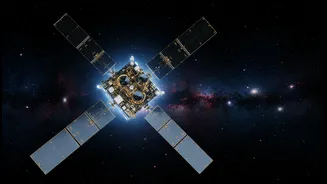
Bengaluru-based GalaxEye emerged as a promising player in India's rapidly growing private space sector. Founded in 2021, the company set out with an ambitious goal: to build the world's first Earth-observation satellite that combines two powerful sensor
technologies. This hybrid satellite, featuring both optical sensors and Synthetic Aperture Radar (SAR), was designed to provide all-weather, day-and-night imaging. This capability would be a game-changer for industries from defence and disaster management to agriculture and infrastructure planning, offering uninterrupted data regardless of cloud cover or darkness.
The Ambitious 'Drishti-1' Mission
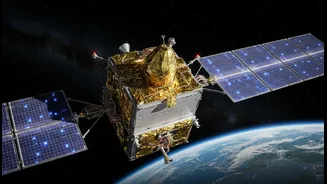
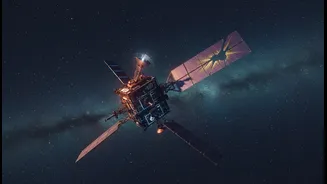
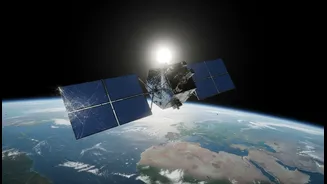
The company's first satellite, dubbed Mission Drishti, was launched on May 3, 2026, aboard a SpaceX Falcon 9 rocket. The launch itself was a milestone, celebrated as a significant moment for India's private space industry. The 190 kg satellite was set to become only the 16th remote sensing satellite available to India, possessing capabilities useful for strategic and security applications. In the initial weeks, everything appeared to be on track. GalaxEye reported that the satellite had successfully established communication, deployed its systems, and validated several critical technologies from its mission control centre in Bengaluru.
An Anomaly in the Cosmos
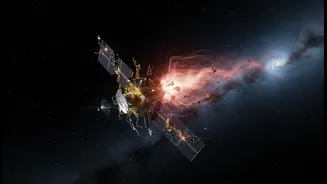
However, more than two months after the launch, GalaxEye confirmed the mission's unfortunate end. During the final stage of its Launch and Early Orbit Phase (LEOP), the Drishti-1 spacecraft encountered a critical anomaly. The company lost intermittent, and then total, communication with the satellite. An initial root cause analysis pointed to an external and unpredictable culprit: a severe geomagnetic solar storm. It is believed that the radiation from this space weather event likely damaged a critical onboard system, silencing the satellite. While recovery efforts were made, the company stated that the likelihood of re-establishing contact was low.
From Setback to Strategic Pivot
Despite the loss of the spacecraft, GalaxEye has been clear that the mission was far from a total failure. CEO Suyash Singh emphasized that the venture provided "invaluable engineering insights that will directly strengthen our future missions." A key lesson learned is the need for greater control over the entire production process. In response to the anomaly, the company announced it is accelerating plans to bring a significant portion of its supply chain, manufacturing, and satellite development processes in-house. This strategic pivot aims to enhance quality control and build more robust systems resilient to harsh space environments.
The Path Forward: Two New Satellites
GalaxEye is already incorporating the learnings from Drishti-1 into its next-generation spacecraft architecture. The company has affirmed its commitment to its long-term roadmap and has announced ambitious plans to launch two new, larger OptoSAR satellites within the next 24 months. These future missions will be built with the knowledge gained from the unexpected solar storm encounter, incorporating enhanced protections and design modifications. The partial success of Drishti-1—validating critical systems and in-house mission control before the anomaly—has provided the foundational confidence and technical data needed for this next phase.