








What Is Project Suncatcher?
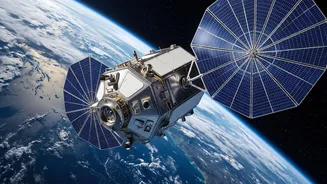
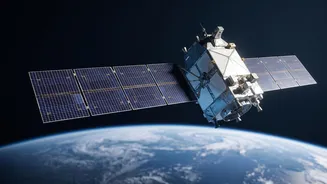
Project Suncatcher is Google's long-term research effort to see if large-scale AI and machine learning infrastructure can one day operate in space. The core idea is to build constellations of satellites equipped with AI processors that could perform powerful
computations right in orbit. Instead of sending massive amounts of raw data back to Earth for analysis, which is slow and expensive, these 'smart' satellites could process information on the spot. This initial mission, launching soon aboard a SpaceX rocket, is the very first step. It's an engineering test designed to answer a fundamental question: can Google's custom AI chips survive and function in the punishing environment of space?
A Crash Course on Google's TPUs
At the heart of this test are Google's Tensor Processing Units, or TPUs. These aren't your average computer chips. Unlike the general-purpose CPUs in your laptop, TPUs are Application-Specific Integrated Circuits (ASICs) built for one primary purpose: to accelerate AI workloads. They are highly specialized for the massive matrix calculations that form the backbone of modern neural networks, the technology behind systems like Gemini and other advanced AI. The same hardware that powers services like Google Search and Photos will now be put to the test in low Earth orbit. This mission will use a handful of TPUs to see how they perform a world away from the safety of a terrestrial data center.
Why Put AI in Orbit?
The ambition behind Project Suncatcher is about overcoming earthly limitations. On-ground data centers are incredibly power-hungry and face increasing environmental scrutiny. In low Earth orbit, satellites can access near-constant sunlight, potentially generating up to eight times more solar power than ground-based panels. This offers a path to scaling AI compute resources with less impact on the planet. Furthermore, processing data directly on satellites would be a revolutionary shift. It enables real-time decision-making, which is critical for applications like disaster response, climate monitoring, and agricultural management. It reduces the bottleneck of beaming petabytes of data down to Earth, improves security by keeping sensitive data in orbit, and allows satellites to operate more autonomously.
The Harsh Realities of Space
Sending commercial-grade electronics into space is no simple task. The journey itself is brutal, with intense vibrations and gravitational forces up to 10 times that of Earth. Once in orbit, the hardware faces an even greater threat: radiation. Without the protection of Earth's atmosphere and magnetic field, cosmic rays and solar particles can corrupt data (an effect known as a 'bit flip') or cause permanent damage to circuits. Another major hurdle is cooling. Air-based cooling systems don't work in a vacuum, so engineers have to rely on systems like heat pipes and radiators to dissipate the intense heat generated by the processors. Google has conducted ground-based tests, including subjecting TPUs to proton beams to simulate radiation, but this in-orbit test will provide the first real-world data on their performance.
The Dawn of Orbital Computing
This prototype mission is just the beginning. Google is already planning follow-up launches for 2027 to test high-bandwidth laser links that could connect these AI-powered satellites, allowing them to work together as a single, powerful orbital data center. While Google is a major player, it's not alone in this new space race; companies like SpaceX and Starcloud are also exploring similar concepts. If these early tests prove successful, we could be looking at a future with interconnected constellations of intelligent satellites. This could unlock incredible new capabilities, from more accurate climate change models and instant wildfire detection to smarter global communication networks and scientific discoveries we can't yet imagine.