






What Is the 'Doomsday Glacier'?
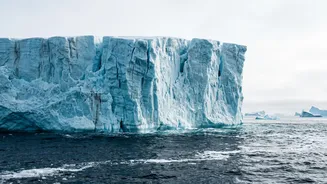
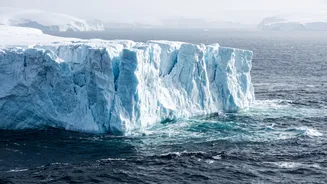
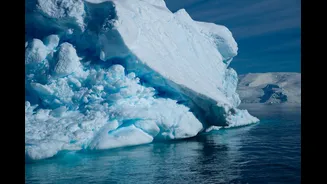
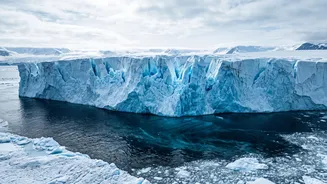
Thwaites Glacier, located in West Antarctica, is one of the largest and fastest-melting glaciers on Earth. It’s roughly the size of Great Britain and so vast that its complete collapse could raise global sea levels by more than two feet (about 65 centimetres).
This potential for catastrophic impact has earned it the ominous nickname 'Doomsday Glacier'. Its melting already contributes to about 4% of annual global sea-level rise. But the true concern is its role as a natural dam. Thwaites currently holds back the rest of the West Antarctic Ice Sheet; if it were to collapse entirely, it could trigger a wider destabilisation leading to a sea-level rise of around 10 feet, which would devastate coastal communities worldwide, including in India.
The Grounding Zone: A Critical Weak Point
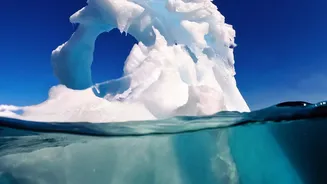
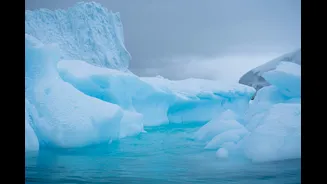
To understand the new findings, we first need to understand the 'grounding zone'. This isn't a sharp line, but a wide area several kilometres across where a glacier transitions from resting on the seabed to floating on the ocean as an ice shelf. For a long time, scientific models treated this boundary as relatively stable. However, recent research shows it's a highly dynamic and vulnerable area. Tides can force warm, salty ocean water deep into this zone, pushing kilometres underneath the grounded part of the ice. This warm water melts the glacier from below in a process that was not fully accounted for in older projections.
What the New Model Reveals
The latest study, published in Nature Communications, incorporated these 'hidden' grounding-zone processes into a new computer model for the first time. Scientists found that this tidal pumping of warm water causes vigorous melting at the glacier's base, far more than previously assumed. When they ran simulations that included this process, the model predicted a significantly faster rate of melting and retreat for Thwaites. Even with no further increase in global warming, the model showed that accounting for this grounding-zone melt could double the glacier's contribution to sea-level rise by 2100 compared to previous estimates. This suggests that many existing forecasts for sea-level rise might be too conservative because they don't fully capture this critical melting mechanism.
Why This Matters for India
A continent away, the fate of Thwaites has direct and severe implications for India's extensive coastline. Even a seemingly small increase in sea level magnifies the dangers of storm surges and coastal flooding for cities like Mumbai and Chennai, and low-lying regions like the Sundarbans and the Mahanadi delta. The accelerated melt from Thwaites reinforces the urgency for strengthening coastal defences, such as improving Coastal Regulation Zone (CRZ) norms, investing in climate-resilient infrastructure like sea walls, and restoring natural buffers like mangroves. The findings from this distant glacier are not just an academic concern; they are a critical warning that will help shape India's strategies for adaptation and protecting its vulnerable coastal populations from a future of rising seas.