



The Green Revolution's Double-Edged Sword
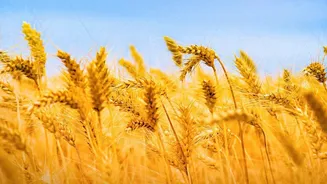
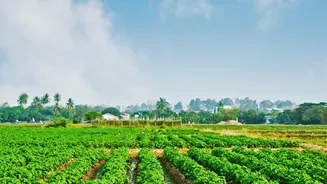
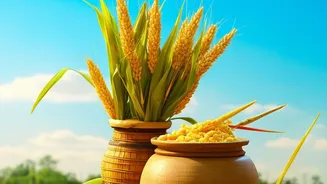
Punjab’s agricultural identity was forged in the Green Revolution of the 1960s. The state became the engine of India's food security by adopting a high-yield rotation of wheat and paddy (rice). This system was underpinned by the government's Minimum Support
Price (MSP) policy, which guaranteed the procurement of these two crops at a fixed price. This assurance created a low-risk, predictable income model that farmers embraced, leading to immense productivity. Today, with just 1.5% of India's geographical area, Punjab contributes a massive share of wheat and rice to the central pool.
The Environmental Cost of Monoculture
The relentless cultivation of paddy, a water-intensive crop, has had severe environmental consequences. Punjab's groundwater is being depleted at an alarming rate, with some experts warning that it could be largely exhausted in the coming years. Farmers report having to dig deeper wells every year, significantly increasing their operational costs. Beyond water, the two-crop system has degraded soil health, requiring ever-increasing amounts of chemical fertilizers. The practice of burning paddy stubble post-harvest to quickly prepare fields for wheat sowing is also a major contributor to the severe air pollution that blankets North India each winter.
What Does Crop Diversification Mean?
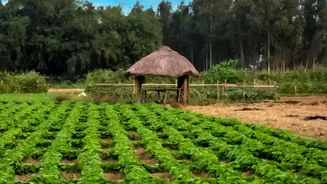
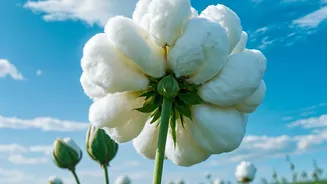
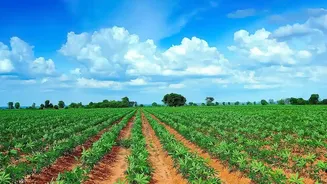
Crop diversification is the strategy of shifting from the dominant wheat-paddy cycle to a wider variety of crops. The focus is particularly on replacing water-guzzling paddy during the Kharif season with alternatives like maize, cotton, pulses (like moong), and oilseeds. These crops generally require significantly less water and can help break the pest and disease cycles associated with monoculture. Proponents argue that a more diverse agricultural landscape is essential for ecological sustainability and can make farming more resilient to climate shocks.
The Income Security Hurdle
If diversification is the clear solution, why aren't more farmers making the switch? The answer lies in economics and risk. The entire agricultural ecosystem in Punjab—from farm machinery to market infrastructure—is built around wheat and paddy. Most importantly, these are the only crops with a robust and assured procurement system at MSP. Farmers who experiment with alternative crops like maize or sunflower often face volatile market prices that can plummet well below the declared MSP, leading to significant losses. Without a guaranteed buyer and a stable price, shifting away from paddy feels like a massive financial gamble that most farmers, many of whom are already in debt, cannot afford to take.
Government Initiatives and the Path Forward
The Punjab government is actively promoting diversification through various schemes. Recently, it expanded a program to 16 districts that offers a financial incentive of ₹17,500 per hectare for farmers who switch from paddy to maize. The process is digitized to ensure transparency, requiring geo-tagging of fields to verify the crop shift. However, experts and farmers agree that such incentives, while helpful, are not enough. The core issue remains the lack of a reliable market and price assurance for alternative crops. For diversification to succeed at scale, it must be as economically secure for the farmer as the current wheat-paddy system. This requires a comprehensive policy that includes not just incentives but also investment in marketing infrastructure, food processing, and a credible price support mechanism for a wider range of crops.