







A Pathfinder's Legacy
To understand CAPSTONE 02, one must first look to its trailblazing predecessor. The original CAPSTONE—a CubeSat no bigger than a microwave oven—launched in 2022 with a critical job: to be the very first spacecraft to test the unique near-rectilinear halo
orbit (NRHO) around the Moon. This orbit is special because it offers a stable point between the gravitational pull of the Earth and the Moon, requiring little energy for long-term missions. The initial mission successfully validated this complex orbit, proving NASA's models were correct and reducing the risks for future missions, particularly the planned Artemis astronaut missions. Having completed its primary and extended mission objectives by mid-2026, CAPSTONE proved that small, cost-effective spacecraft could tackle big challenges.
What is CAPSTONE 02?
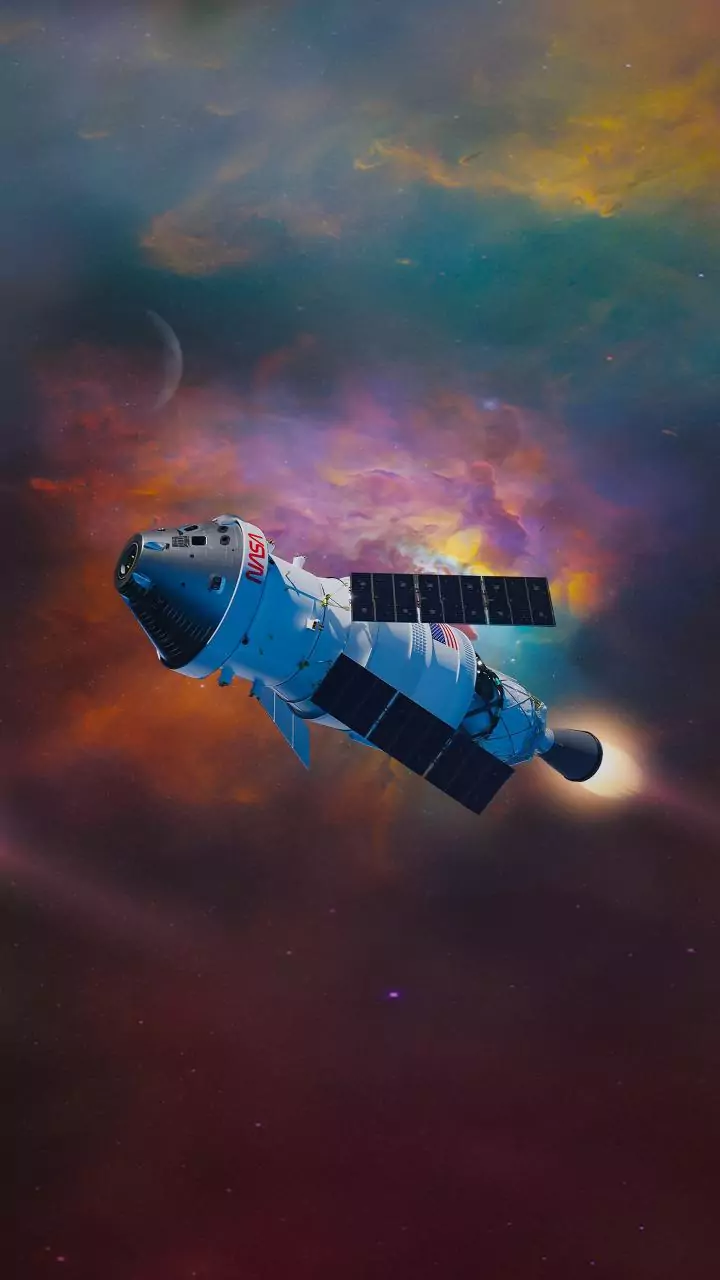
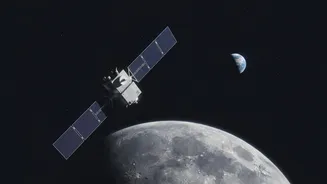
Announced by NASA in July 2026, CAPSTONE 02 is a more ambitious follow-up mission designed to demonstrate the next set of capabilities required for a bustling lunar environment. Targeted for a 2027 launch, this mission won't involve just one, but two identical spacecraft. These spacecraft are significantly larger than the original, weighing around 400 kilograms each. Their primary purpose is to test and prove out technologies for rendezvous, proximity operations, and autonomous navigation in the complex gravitational environment of the Moon. In simple terms, NASA is learning how to make spacecraft operate intelligently and cooperatively around the Moon, without constant micromanagement from Earth.
The Power of Autonomous Operations
A key goal of CAPSTONE 02 is demonstrating autonomous navigation. Future lunar operations will involve numerous spacecraft—landers, orbiters, and transfer vehicles—all needing to know precisely where they are. Relying solely on ground-based tracking from Earth is slow and inefficient. CAPSTONE 02 will test advanced relative navigation, where spacecraft can determine their position by communicating with each other and observing celestial bodies. The two spacecraft will perform a delicate dance in lunar orbit, conducting a series of rendezvous and formation flying maneuvers. This is more complex than in Earth orbit because of the competing gravitational forces. Mastering these techniques is essential for future astronaut crews to safely dock with landers that will take them to the lunar surface.
Building the 'LunaNet'
Beyond spacecraft autonomy, CAPSTONE 02 will contribute to a grander vision: LunaNet. This NASA-led concept is an ambitious plan to create an internet-like network for the Moon. This architecture would provide communications and navigation services for all lunar assets, from orbiters to rovers and astronauts on the surface. Think of it as a combination of Earth's internet and GPS, but tailored for the Moon. A robust communications network is vital for streaming high-definition video from spacewalks, transmitting vast amounts of scientific data, and ensuring reliable contact. Navigation services, meanwhile, would allow astronauts and rovers to pinpoint their location with high precision, a critical safety feature in the Moon's visually ambiguous landscape. Missions like CAPSTONE 02 and earlier demonstrators like Lunar Node 1 are the foundational steps in building this interoperable network.
The Blueprint for a Moon Base
Ultimately, the capabilities being tested by CAPSTONE 02 are not just technical exercises; they are essential building blocks for establishing humanity's first permanent outpost on another celestial body. NASA's plan for a sustained lunar presence near the Moon's south pole hinges on this kind of infrastructure. A permanent base requires a reliable network for communication and navigation, and the ability for spacecraft to operate and dock autonomously will be crucial for logistics and crew transfers. By using smaller, focused missions like CAPSTONE 02 to test these technologies first, NASA can reduce the risk and cost of the larger Artemis missions. It’s a strategy of taking steady, deliberate steps to turn the science fiction dream of a Moon base into a tangible reality by the 2030s.