







The Rocket: GSLV Mk II
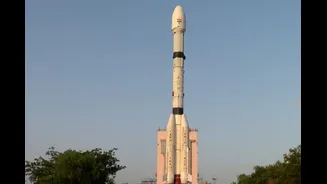
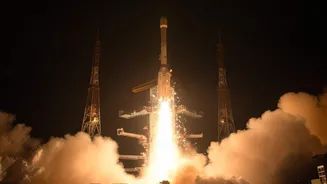
The rocket at the heart of this mission is the Geosynchronous Satellite Launch Vehicle Mk II (GSLV Mk II). This 51.7-metre-tall, three-stage vehicle is one of ISRO's most powerful launchers, designed specifically to place heavier satellites into high-energy
orbits. The GSLV is composed of a solid propellant first stage augmented by four liquid-fueled strap-on boosters, a liquid second stage, and, crucially, an indigenous cryogenic upper stage. This cryogenic engine, which uses liquid hydrogen and liquid oxygen, provides the immense thrust needed to deliver satellites to geosynchronous transfer orbit (GTO), a feat achieved by only a handful of nations. While the GSLV was once nicknamed ISRO's 'naughty boy' for early inconsistencies, it has since evolved into a reliable vehicle for India's most ambitious missions.
The Payload: A New Eye on Earth
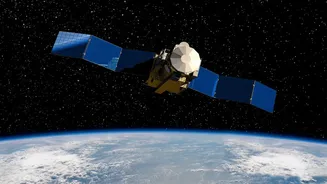
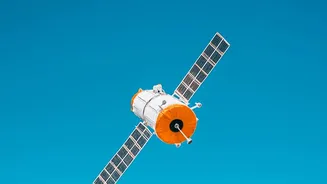
The GSLV-F17 carried the EOS-05, an advanced Earth observation satellite. This isn't just another satellite; it's India's first imaging satellite designed to operate from a geosynchronous orbit, some 36,000 kilometres above the Earth. Unlike satellites in Low Earth Orbit (LEO) that circle the globe multiple times a day, a satellite in geosynchronous orbit matches the Earth's rotation. This allows it to 'hover' over a specific region—in this case, the Indian subcontinent—providing continuous, near real-time monitoring. The satellite is equipped with sophisticated multi-spectral imagers capable of capturing data across various wavelengths, offering insights far beyond what the human eye can see.
Why This Orbit Matters
The choice of a geosynchronous orbit is a game-changer for India's observation capabilities. While LEO satellites provide high-resolution images, they can only capture snapshots of a location as they pass over it. For tracking rapidly developing events like cyclones, floods, or forest fires, this periodic coverage has limitations. The EOS-05's constant watch over a large area eliminates this revisit gap. It can provide an uninterrupted stream of data, which is invaluable for disaster management agencies to monitor situations as they unfold, issue timely warnings, and coordinate response efforts more effectively. This persistent observation capability plugs a critical gap in India's surveillance and monitoring infrastructure.
Benefits for India
The data from EOS-05 will have wide-ranging applications that directly benefit the nation. For agriculture, it can help in monitoring crop health, assessing soil moisture, and providing more accurate yield predictions. In urban planning, the satellite's data can be used to track land use changes and manage urban sprawl. Environmental monitoring, from tracking deforestation to observing water bodies and glacial melt, will also receive a significant boost. Beyond civilian uses, the satellite enhances India's strategic capabilities, providing vital data for national security and border monitoring. This mission strengthens India's self-reliance in critical space-based services, reducing dependence on foreign data for sensitive applications.
The Launch from Sriharikota
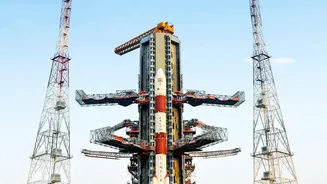
The entire operation took place at ISRO's primary spaceport, the Satish Dhawan Space Centre (SDSC) in Sriharikota, Andhra Pradesh. After lifting off from the Second Launch Pad, the GSLV-F17 performed its flight sequence flawlessly. The powerful first stage and strap-on boosters provided the initial thrust before separating, followed by the ignition of the second stage. The crucial third cryogenic stage then fired to propel the EOS-05 satellite into its designated sub-geosynchronous transfer orbit about 18 minutes after liftoff. From this elliptical orbit, ISRO's scientists will perform a series of intricate manoeuvres over the coming days to guide the satellite into its final circular geosynchronous orbit, ready to begin its mission.