



The Specialist's Dilemma
For decades, the path to a successful career was clear: specialize. Become an expert in a narrow field, and your skills would be invaluable. However, Musk argues this logic is being turned on its head by artificial intelligence. As AI becomes increasingly
capable of performing highly specialized tasks—from writing code to analyzing data—the human advantage may no longer lie in execution. In a September 2026 interview, Musk suggested that the real value will shift upstream, moving from doing the work to deciding what work needs to be done in the first place. This creates a dilemma for those who have built their careers around a single, deep skill set that could one day be automated.
Embracing the 'Expert Generalist'
Musk’s solution is to become what many call an 'expert generalist'. This isn't about being a 'jack of all trades, master of none'. Instead, it's about developing a 'T-shaped' skill set: deep knowledge in one core area, supported by a broad, functional understanding of many others. Citing his own background in physics and business, Musk recommends that young people pursue a broad-based education covering arts, sciences, and engineering. The goal is to build a mental toolkit that allows you to connect ideas from seemingly unrelated fields. This cross-disciplinary thinking is what sparks innovation—the kind that AI can execute but not yet originate on its own.
Directing the Future, Not Just Coding It
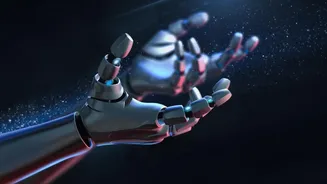
The headline's idea of 'directing future robots' gets to the heart of Musk's argument. He envisions a future where the most critical human skill is the ability to communicate our desires effectively to machines. In his interview with China Media Group, he referred to this as a form of 'prompt engineering' for the physical world. To tell a robot what you want, you first need a broad understanding of what is possible, what is desirable, and what is ethical. A person who understands only code might build a technically perfect system, but someone who also understands psychology, economics, and history will know whether that system should be built at all. This context-driven judgment becomes the ultimate human advantage.
An Action Plan for Indian Aspirants
For students and young professionals in India's dynamic tech landscape, this advice is particularly relevant. The temptation to hyper-specialize to land a job is strong. However, Musk's perspective suggests a parallel strategy: cultivate curiosity. This can be done by reading widely outside your core subject, working on interdisciplinary projects, and prioritising soft skills like communication and critical thinking alongside technical ones. Studies have shown that interdisciplinary learning is linked to greater adaptability in the workforce. In an ecosystem that values 'jugaad' or frugal innovation, the ability to connect disparate ideas is already a cultural strength. Formalizing this into a learning strategy could provide a significant edge as global work trends evolve.
The End of Scarcity?
Underpinning Musk's career advice is a radical vision of the future: an 'age of abundance'. He predicts that AI and robotics will boost the production of goods and services so dramatically that they could lead to 'universal high income' for everyone. In such a world, he has mused, money itself might lose its relevance. While this is a long-term, speculative vision, it informs his immediate advice. If basic needs are met by automated systems, human work will naturally gravitate toward creativity, exploration, philosophy, and purpose—pursuits that require broad understanding and a sense of what is meaningful, not just what is efficient.