


More Than Just Monsoon Rains
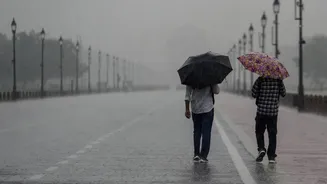
The Himalayas have always been a region of immense natural power, where monsoon rains can swell rivers and trigger landslides. For decades, this was the standard explanation for the annual devastation faced by communities in Nepal. The combination of steep
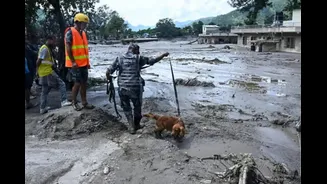
topography and intense seasonal rainfall created a known, if dangerous, pattern. However, a series of recent disasters, including a devastating flood on August 26, 2026, occurred without the extraordinary rainfall that would typically explain such a catastrophe. This discrepancy sent scientists searching for a different, more explosive trigger, suggesting our traditional understanding of Himalayan floods is dangerously incomplete.
The New Culprit: Ice-Rock Avalanches
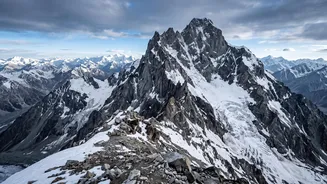
The emerging theory centres on a phenomenon far more sudden and violent than seasonal melt: massive ice-rock avalanches. A recent catastrophe along the Nepal-Tibet border was not caused by a glacial lake outburst flood (GLOF) or an earthquake, but by a colossal chunk of a mountainside, including parts of a glacier, breaking free. This collapse was so immense that it registered as a magnitude 5.2 seismic event. Rather than water slowly accumulating and bursting a dam, this new model involves a near-instantaneous collapse of rock and ice, which then transforms into a fast-moving, debris-laden torrent as it thunders down a valley.
Anatomy of a Cascading Disaster
The mechanics of this new disaster type are terrifyingly efficient. First, a massive section of rock and glacial ice, potentially destabilised by warming permafrost, detaches from a high altitude. In the August 2026 event, a slab estimated to be 0.2 square kilometres broke off at an elevation of 5,200 metres and fell 1,200 metres. The immense energy from the fall melts the ice and pulverises the rock, creating a slurry. This torrent can temporarily dam a river, causing water to build up rapidly behind an unstable barrier of debris. When this natural dam inevitably fails, it releases a wall of water, mud, and boulders that moves at incredible speed, capable of raising river levels by nine metres in just half an hour.
The Climate Change Connection
While scientists are cautious about attributing any single event directly to climate change, the trend is undeniable. The Himalayas are warming at a rate faster than the global average. This warming is degrading the high-altitude permafrost, the frozen 'glue' that holds steep rock and ice formations together. As this glue thaws, the mountainsides become less stable. Furthermore, accelerated glacier melt exposes darker rock, which absorbs more heat and further speeds up the process, making these massive collapses more likely. Though a direct link to the recent event is still under investigation, scientists agree that rising global temperatures are increasing the chances of such cascading hazards in the Himalayas.
A Shared Threat for the Region
These catastrophic events do not respect international borders. Rivers originating in Nepal's mountains flow directly into India, primarily affecting states like Bihar and Uttar Pradesh. The 2008 Kosi disaster, which saw a river breach its embankment in Nepal and cause widespread devastation in Bihar, serves as a stark reminder of this shared vulnerability. The new understanding of ice-rock avalanches means that downstream regions in India face a threat that is not only severe but also harder to predict than rainfall-based floods. Past data shows India has suffered the highest number of fatalities from glacial flood events in the Hindu Kush Himalaya region, making cross-border monitoring and early warning systems more critical than ever.