







A Strategy of Expansion, Not Sale
Recent statements from ISRO leadership have been unequivocal: the space agency is not for sale. Fears of privatisation stem from a misunderstanding of the government's sweeping space sector reforms, which began in 2020. The goal isn't to sell off India's
premier space organisation, but to fundamentally expand the entire national space ecosystem. ISRO officials have clarified that the reforms are designed to multiply the country's capabilities, not diminish the agency's role. The strategy is to transition ISRO from being the sole manufacturer and operator of everything space-related to a more focused research and development powerhouse, allowing it to tackle frontier science and strategic missions.
Meet the New Players: IN-SPACe and NSIL
At the heart of this new strategy are two key bodies: the Indian National Space Promotion and Authorisation Centre (IN-SPACe) and NewSpace India Limited (NSIL). Think of IN-SPACe as the single-window facilitator and regulator, created to empower and supervise private companies wanting to enter the space sector. It helps them access ISRO's facilities and technical expertise. NSIL, on the other hand, is the commercial arm of ISRO. Its job is to commercialise the technologies developed by ISRO, manage satellite launch contracts for customers, and enable Indian industries to take up high-tech space manufacturing. This structure allows ISRO to hand off mature operations to the private sector via a clear, regulated path.
From Manufacturer to Mentor
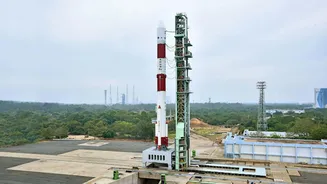
Instead of competing with the private sector, ISRO is actively becoming its incubator. A prime example is the transfer of technology for its workhorse rockets, the Polar Satellite Launch Vehicle (PSLV) and the Small Satellite Launch Vehicle (SSLV). Rather than building every rocket itself, ISRO is licensing the manufacturing to consortia of Indian companies like Hindustan Aeronautics Limited (HAL) and Larsen & Toubro (L&T). This frees up ISRO's scientists and engineers to focus on more complex, next-generation challenges like the Gaganyaan human spaceflight mission, developing reusable launch vehicles, and planning a crewed mission to the Moon by 2040. It's a shift from doing everything to leading the way.
The Strategic and Security Imperative
While commercial activities are being opened up, ISRO will retain control over projects of national and strategic importance. This includes defence communication satellites like the GSAT-7B for the Indian Army, advanced earth observation, and deep space exploration missions. Keeping ISRO as a government entity ensures that India maintains sovereign control over its critical space assets and infrastructure. The Indian Space Policy 2023 clearly delineates these roles, ensuring that while the private sector drives commercial growth, ISRO remains the custodian of India's strategic autonomy in space, a critical factor in today's geopolitical landscape.
Growing the Pie for Everyone
The ultimate vision is not to shrink ISRO, but to dramatically grow India's share of the global space economy. Currently, India accounts for a small fraction of the worldwide market. By enabling a vibrant private sector, the government aims to increase the Indian space economy from approximately $8.4 billion to over $40 billion by 2030. This model leverages ISRO's decades of expertise as a foundation for private innovation and investment. As ISRO Chairman V Narayanan noted, the country needs about 50 launches per year, a demand far greater than ISRO can meet alone. By bringing in private players, the entire ecosystem scales up, creating jobs, fostering innovation, and positioning India as a global space hub.