



The AI Chatbot Gold Rush
The past few years have been dominated by the rapid rise of generative AI. Companies have poured billions into developing powerful large language models (LLMs) and the conversational chatbots they power. At the forefront of this for Elon Musk’s suite
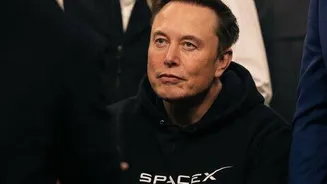
of companies is xAI, which develops the chatbot Grok. Initially a standalone company, xAI was acquired by SpaceX in early 2026, creating a $1.25 trillion entity that combines rocketry with artificial intelligence. The goal is to compete with giants like OpenAI and Google. The public-facing product is the chatbot, the seemingly intelligent service that can answer questions, write code, and generate text. This is what captures the public imagination and, for many, represents the finish line of the AI race. But focusing only on the chatbot is like watching a single gold prospector while ignoring the person selling them the shovels, pans, and land.
The Real Cost of Intelligence
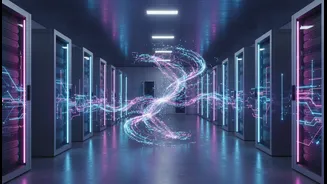
What often gets lost in the excitement about AI capabilities is the staggering cost of the underlying infrastructure. Training and running a large-scale AI model requires an almost unimaginable amount of computing power. This power is housed in specialized data centers, packed with thousands of high-end graphics processing units (GPUs). These aren't your typical data centers; AI workloads demand 3 to 10 times more electricity per rack and generate immense heat, requiring advanced liquid cooling systems instead of traditional air conditioning. Morgan Stanley predicts the industry will spend $3 trillion between 2025 and 2029 just building these AI-specific facilities. The sheer energy and capital required to get an AI model off the ground and keep it running is the single biggest bottleneck in the industry.
Enter the 'Gigafactory of Compute'
Recognizing this physical constraint, Musk has embarked on building what he calls a “gigafactory of compute.” This involves constructing massive, AI-focused data centers, such as the 'Colossus' facilities in Tennessee and Mississippi. The first Colossus supercomputer, built to train Grok, came online in 2024 with 100,000 high-end Nvidia GPUs. These facilities are designed to solve the compute shortage for Musk's own companies—xAI, Tesla, and SpaceX—but the ambition is far greater. By building one of the world's largest and most powerful AI computing infrastructures, the company is not just creating a tool for its own use; it is building a highly valuable asset that others will need access to. Already, companies like Google and Anthropic have signed massive deals to rent compute capacity at these new data centers, demonstrating the intense demand.
An Amazon Web Services Playbook
The strategy is reminiscent of how Amazon built its most profitable division, Amazon Web Services (AWS). Originally, Amazon built a world-class internal infrastructure to run its own e-commerce website. Then, it realized it could rent out its excess server capacity and infrastructure management expertise to other companies. Today, AWS is the dominant force in cloud computing and generates more profit than Amazon's entire retail business. SpaceX appears to be following a similar playbook. It's building the essential, capital-intensive infrastructure needed for the AI revolution, first for itself, and then, potentially, for everyone else. Selling access to a data center provides a steadier, more predictable revenue stream than competing in the fickle consumer-facing application market.
The Final Frontier: Data Centers in Space
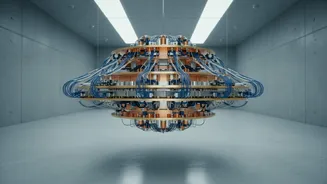
The long-term vision is even more audacious: moving data centers into orbit. The merger of SpaceX and xAI was explicitly driven by this goal. The two biggest constraints for Earth-based data centers are power and cooling. In space, solar panels can provide nearly uninterrupted energy, and the vacuum allows for passive radiative cooling, radiating heat directly into space. SpaceX's plan, codenamed 'Starmind', involves using its reusable Starship rockets to launch satellites that function as orbiting server racks. This would leverage the company's core competencies in rocketry and satellite networks (Starlink) to create a global, solar-powered computing network. While still a long way off, if successful, it would create an unparalleled competitive advantage by solving the fundamental physical limits of AI on Earth. The value of owning that infrastructure would be astronomical.