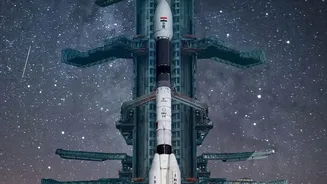






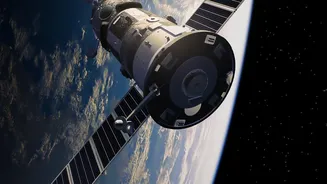
India stands on the brink of history with its Gaganyaan mission, a national endeavour to send astronauts into orbit. The journey to this moment has been one of intense preparation, from foundational training in Russia to advanced work in Bengaluru.
An Ambitious Leap into Orbit
The
Gaganyaan programme is India's first human spaceflight mission, a monumental undertaking by the Indian Space Research Organisation (ISRO). The primary goal is to demonstrate the nation's capability to launch a crew of three astronauts into a 400-kilometre orbit for a three-day mission and bring them safely back to Earth, with a splashdown in Indian sea waters. This project places India in an elite club of nations with human spaceflight capabilities. Originally announced in 2018, the programme has navigated delays, including those caused by the COVID-19 pandemic, with a steadfast focus on safety and technological perfection. As of late 2026, ISRO has confirmed the mission is in its final phase of preparation.
Forged in Russia, Honed in India
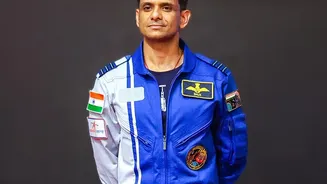
A crucial part of preparing the 'Vyomanauts'—a name derived from the Sanskrit word for 'sky' or 'space'—was their initial training in Russia. The four astronaut-designates, all distinguished Indian Air Force pilots, underwent a comprehensive 12-month training programme at Russia's renowned Gagarin Cosmonaut Training Center starting in 2020. This foundational phase included biomedical training, studying the systems of the Soyuz spacecraft, and experiencing short-term weightlessness aboard a special Il-76MDK aircraft. They also completed rigorous survival training for various landing scenarios, including wooded areas, marshes, and open water. This international collaboration provided the crew with a robust grounding in the essentials of space travel before they returned to India for mission-specific training.
The Bengaluru Hub for Spaceflight
With the generic training completed, the focus has shifted to the Human Space Flight Centre (HSFC) in Bengaluru. ISRO has operationalised an Astronaut Training Facility where the crew undertakes mission-specific and module-specific instruction. This advanced phase includes intensive work with simulators that replicate the Gaganyaan crew module's interfaces, its environmental control and life support systems, and flight procedures. The curriculum, which also includes academic courses, aero-medical training, and yoga, is designed to prepare the astronauts for every aspect of their specific mission aboard the Indian-made spacecraft. While this facility meets the needs of Gaganyaan, a larger, more advanced campus is planned at Challakere for future human space programmes.
Technology and Timelines
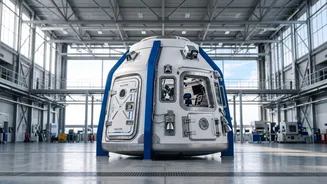
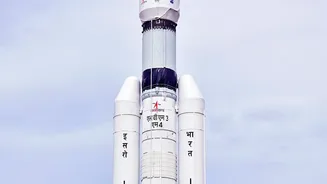
The success of Gaganyaan hinges on a host of critical technologies developed indigenously. This includes the human-rated LVM3 launch vehicle (HLVM3), the orbital module (comprising the crew and service modules), and a robust crew escape system. Ensuring every component is 'human-rated' involves a meticulous process of testing and qualification to meet the highest safety standards. Before the crewed mission, designated H1, can launch, ISRO has planned a series of precursor flights. These include multiple uncrewed test flights, the first of which, G1, is targeted for the end of 2026. This uncrewed flight will carry a humanoid robot named 'Vyommitra' to validate the performance of all systems in space. While some reports in late 2026 suggested a possible shift of the G1 launch to early 2027, ISRO's chairman has maintained that preparations are in their final stage. The first crewed flight is currently anticipated in 2027, following the successful completion of all uncrewed tests.