

The High-Speed Vision
The project in question is the Delhi-Varanasi High-Speed Rail (DVHSR) corridor, a major infrastructure undertaking planned by the National High Speed Rail Corporation Limited (NHSRCL). This isn't just about a faster train; it's about a 'bullet train'
system, with proposed operational speeds of around 320 km/h. The goal is to slash the travel time over the roughly 800-kilometre route to approximately 3 hours and 50 minutes. This initiative is part of a larger government plan to introduce seven new high-speed rail corridors, aimed at transforming inter-city travel and boosting regional economies.
From 8 Hours to Under 4
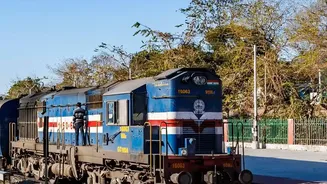
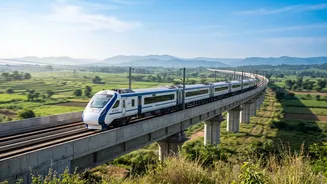
To appreciate the scale of this ambition, consider the current travel options. The fastest train presently connecting New Delhi and Varanasi is the Vande Bharat Express, which covers the distance in about eight hours. Other trains can take anywhere from 10 to 13 hours. A sub-four-hour journey would therefore be revolutionary, more than halving the best available travel time and making day trips between these two pivotal cities a viable option. This leap in speed and efficiency could fundamentally change how people approach business, tourism, and personal travel along this busy route.
What's the Current Status?
The Delhi-Varanasi corridor is currently in the advanced planning stages. The Detailed Project Report (DPR), a comprehensive document outlining technical specifications, environmental impact, and financial viability, was submitted to the Ministry of Railways by the NHSRCL. Various surveys, including aerial LiDAR mapping, have been completed to finalise the alignment of the tracks. However, the project is still in the 'proposed' phase, meaning that while significant groundwork and planning have been done, final government approvals and the sanctioning of construction are still pending.
The Proposed Route and Its Impact
The proposed 865-km line is set to connect major economic and religious hubs across Uttar Pradesh. The route is planned to include 12 stations, starting from Sarai Kale Khan in Delhi and passing through Noida, the upcoming Jewar Airport, Agra, Lucknow, and Prayagraj before terminating in Varanasi. There's also a proposed spur line to connect Ayodhya via Lucknow, further enhancing connectivity. The integration with the new Noida International Airport at Jewar is a key feature, aiming to create a multi-modal transport hub. Proponents argue the corridor will not just be a transport link but an 'economic connector', stimulating development and job creation in the cities along its path.
The Hurdles Ahead
An undertaking of this magnitude is not without significant challenges. The estimated cost of the project is substantial, pegged at approximately ₹1.21 lakh crore. Securing funding and ensuring financial viability are crucial next steps. Beyond the cost, land acquisition is often the most complex and time-consuming part of any large infrastructure project in India. While the route has been designed to run along existing highways and greenfield areas to minimise disruption, acquiring the necessary land remains a formidable task. Finally, the technical complexity of building a railway line capable of handling speeds of over 300 km/h requires specialised expertise and technology.