



Reinventing an Icon for the Electric Age
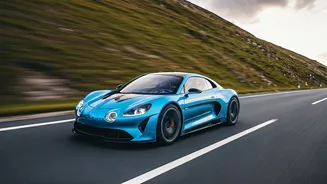
French performance brand Alpine is tackling the electric transition head-on, not by abandoning its core principles, but by reinventing them with cutting-edge technology. The company recently showcased a development prototype, dubbed the A110 Future, which
serves as a rolling laboratory for its next-generation all-electric sports car. This isn't just about making a fast EV; it's about making an EV that feels like an Alpine. The current petrol-powered A110 is celebrated for its low weight and nimble character, attributes that are notoriously difficult to replicate in battery-electric vehicles, which are inherently heavier. Alpine's solution is a showcase of clever engineering, designed to prove that the soul of a driver's car can thrive in an electric future. The prototype will make its public debut at the Goodwood Festival of Speed, demonstrating the brand's commitment to a performance-oriented electric path.
The Heart of the Machine: A Dual-Motor E-Axle
At the core of the A110 Future prototype is a sophisticated new powertrain. Instead of a single motor or the common all-wheel-drive setup with one motor per axle, Alpine has engineered a compact unit featuring two electric motors mounted together on the rear axle. This '3-in-1 e-axle' integrates the two motors, a reduction gearbox, and a high-performance silicon carbide inverter into a single package. This configuration is a deliberate choice aimed at delivering ultrafast and precise control over the power sent to each individual rear wheel. While dual-motor systems exist, placing them on the same axle to independently drive the left and right wheels is the key to unlocking a new level of dynamic capability, moving beyond simple acceleration and into the realm of software-defined handling.
What is Torque Vectoring, Anyway?
The dual-motor setup enables a technology called torque vectoring. In simple terms, it's the ability to send different amounts of twisting force, or torque, to individual wheels. Think of paddling a canoe: if you paddle harder on the right side, the canoe turns left. Alpine's system does the same thing with electric motors. When cornering, a sophisticated control system can instantly deliver more power to the outer rear wheel while simultaneously reducing power—or even applying regenerative braking—to the inner wheel. This creates a turning force, or yaw moment, that helps pivot the car into the corner more sharply and maintain stability. Unlike older brake-based systems that slow a wheel down to turn, this active system can both push and pull, offering a much more precise and efficient way to influence the car's behaviour.
More Than Just Speed: The Feel is Everything
For Alpine, this technology is the answer to the weight problem. While the future electric A110 will be heavier than its petrol predecessor, active torque vectoring can make it feel just as agile, if not more so. The system, which Alpine calls 'Alpine Active Torque Vectoring' (AATV), can adjust power distribution every 10 milliseconds. This rapid response helps counteract understeer (where the car wants to push straight in a turn) and makes the vehicle feel more responsive to steering inputs. The goal is to deliver that trademark lightweight driving feel, even with the mass of a battery pack. To further aid handling, the prototype uses a unique split battery pack, with modules at both the front and rear, to achieve an ideal 40:60 weight distribution, similar to a traditional mid-engine sports car.
A Glimpse into Alpine's Electric Future
The A110 Future is more than just a concept; it is built on the brand's new 'Alpine Performance Platform' (APP), a dedicated EV architecture that will underpin its future sports cars. This platform, featuring an 800-volt electrical system for faster charging, is designed to be versatile enough for coupe, spider, and 2+2 models. The technology showcased in the prototype is a clear statement of intent. It signals that Alpine's upcoming models, including the A290 electric hot hatch and A390 fastback, will be infused with a focus on driver engagement. By developing this dual-motor technology, Alpine is ensuring its survival and relevance, promising that its electric cars will be defined by sharp performance and handling, not just straight-line speed.