






The Quest for the Perfect Low Bun
The low bun is the epitome of effortless chic. It can be sleek and professional for the office, or soft and romantic for an evening out. Yet, for many, the reality of creating one is a battle with lopsided shapes, loose strands, and a finished style that
looks more like an afterthought than a statement. The common culprits are often an uneven foundation and a haphazard wrapping technique. The goal is to create a bun that sits neatly at the nape of the neck, with a uniform shape and a secure hold that doesn't rely on a dozen pins. The solution lies not in complex tools but in a methodical approach that starts with the ponytail itself, ensuring the hair is primed for a perfect coil.
Start with a Solid Foundation
Before you even think about twisting, the initial ponytail sets the stage for success. Begin by brushing your hair thoroughly to remove any knots or tangles. For a sleeker look, you can apply a smoothing cream or a light-hold gel. Gather your hair into a low ponytail at the nape of your neck, right in the center. This placement is crucial for balance. Use a quality hair tie that provides a firm but not overly tight hold. The ponytail should be secure enough that it doesn’t sag, but not so tight that it creates bumps or pulls uncomfortably at your scalp. This solid anchor point is the base from which you will build your balanced bun.
The Secret Is in the Twist
Here is the game-changing step. Instead of wrapping your ponytail directly, you first need to twist it into a rope. You can either twist the entire ponytail as one single, tight rope, or for more texture and control, split the ponytail into two equal sections. Twist each of the two strands individually until they become taut, like ropes. Then, wrap these two twisted strands around each other. The key, as the headline suggests, is to apply even tension as you twist. An uneven twist—tighter at the base and looser at the ends—will result in a bun that is bulky on one side and sparse on the other. A consistent, even twist from the base of the ponytail to the ends ensures the hair has a uniform density, which is essential for creating a compact and symmetrical bun.
Coiling With Control and Purpose
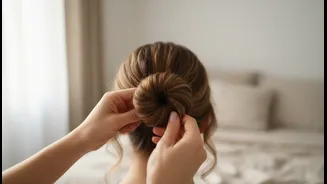
With your perfectly twisted ponytail rope ready, the coiling process becomes much more predictable. Begin to wrap the twisted hair around the base of your ponytail. Go with the natural direction of the twist, allowing it to coil around itself. Maintain a gentle but firm tension as you wrap. This prevents gaps from forming and keeps the overall shape compact. As you wrap the coil, guide it with your other hand to maintain a circular, even shape. Instead of letting it build outwards into a messy blob, think about coiling it flat against your head first and then building slightly on top of that initial coil. When you reach the end of your hair, tuck the tips securely underneath the bun.
Secure Your Style for the Day
A great bun is a secure bun. Once you've coiled your hair and tucked the ends, it's time to lock it in place. For a very secure hold, you can use another hair tie over the entire bun. However, for a more polished look, bobby pins or U-shaped hairpins are your best friends. Instead of just pushing pins in from the outside, a better technique is to anchor them. Catch a small piece of hair from the outer edge of the bun with the pin, then direct the pin down and into the base of the bun, catching the hair from the initial ponytail. This locks the bun to its foundation. Use as many pins as you need to feel secure, placing them evenly around the bun's circumference.
Finishing Touches and Troubleshooting
For a final professional touch, gently smooth down any flyaways around your hairline or on the bun itself with a light mist of hairspray or a touch of styling wax. If you prefer a softer, more romantic look, you can gently pull out a few face-framing tendrils. If your bun feels too tight, you can gently tug at the edges to loosen it slightly, a technique often called 'pancaking'. If you have very thick hair, splitting the ponytail into three or four twisted sections before coiling them can help manage the bulk. For fine hair, using a texturizing spray before you start can add grip and volume, making the bun appear fuller.