


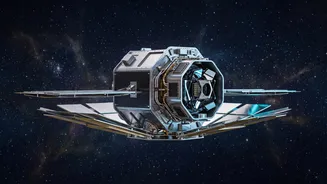
A Final Fiery Plunge
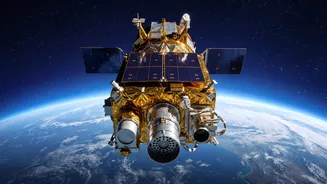
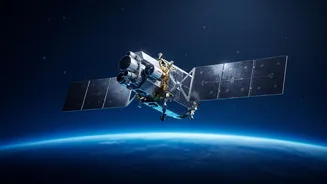
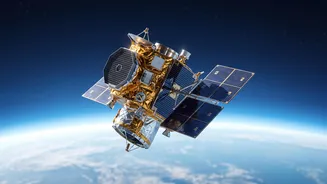
On November 4, 2026, NASA's Neil Gehrels Swift Observatory concluded its mission by re-entering Earth's atmosphere. The U.S. Space Force confirmed the 3,200-pound spacecraft made its final descent at 7:39 a.m. EST over the North Sumatra region of Indonesia.
After instruments were shut down on October 20, the satellite's orbit, which had been decaying for some time, finally brought it down. The end was precipitated by increased solar activity, which heated and expanded Earth's upper atmosphere, creating more drag on the satellite and accelerating its fall. While most of the observatory was expected to burn up upon re-entry, it is possible some durable components survived the plunge.
A Daring but Failed Rescue
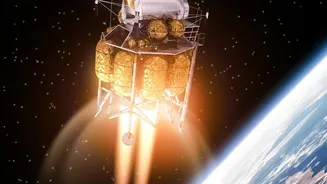
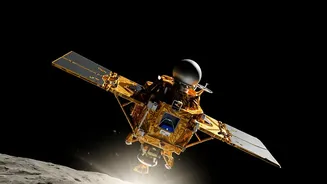
Swift's demise was not for lack of trying. The observatory, which lacked its own propulsion system to correct its orbit, became a candidate for a pioneering rescue mission. In 2025, NASA contracted a private company, Katalyst Space Technologies, to build and launch a robotic spacecraft named 'Link'. The goal was for Link to grab onto Swift and boost it into a higher, more stable orbit, extending its operational life. Launched in July 2026, the $30 million mission unfortunately encountered technical problems shortly after reaching space. The rescue craft suffered malfunctions with its orientation controls, preventing a safe rendezvous. The attempt was called off in August, sealing Swift's fate.
The Cosmic Mystery Hunter
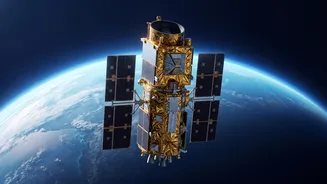
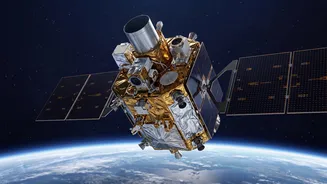
Launched in November 2004, the Swift Observatory was designed for a two-year mission to solve a major cosmic puzzle: gamma-ray bursts (GRBs). These are the most powerful explosions in the universe, releasing immense energy but often lasting only a few seconds. Before Swift, their origins were shrouded in mystery. The observatory's name was a nod to its key capability: it could 'swiftly' reorient itself in under 90 seconds to focus its three telescopes on a newly detected burst. Its Burst Alert Telescope would first spot the gamma rays, then its X-ray and Ultraviolet/Optical telescopes would zoom in to study the fading 'afterglow', allowing scientists to pinpoint the source and study it in multiple wavelengths of light.
A Legacy of Discovery
In its nearly 22 years of service, Swift far surpassed its original goals. It detected over 2,000 gamma-ray bursts, helping to confirm that many are caused by the collapse of massive stars or the merger of dense neutron stars. In 2009, it spotted GRB 090423, a burst from a star that died when the universe was just 630 million years old, making it one of the most distant cosmic explosions ever seen at the time. But its work wasn't limited to GRBs. Swift evolved into a versatile 'target-of-opportunity' observatory, observing everything from over 1,400 supernovae to comets in our own solar system and supermassive black holes in distant galaxies. In 2008, it made history by capturing the first-ever images of a star in the very act of exploding.
What Comes Next
The loss of Swift leaves a significant gap in astronomy. Its unique, rapid-response capability allowed scientists worldwide to coordinate observations of fleeting cosmic events. While other telescopes like the Fermi Gamma-ray Space Telescope can detect bursts, none can pinpoint their locations with Swift's speed and precision. However, the mission's end is not a complete loss. The vast archive of data collected by Swift over two decades will continue to be a treasure trove for scientists, fueling new discoveries for years to come. NASA has stated that the data and the lessons learned from Swift's revolutionary approach to time-domain astronomy will inform the development of future missions designed to monitor the ever-changing universe.