






A Sudden Change at the Top
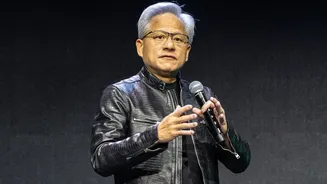
On November 12, Jensen Huang, the leather-jacketed co-founder who led Nvidia for over 30 years, resigned as President and CEO. The abrupt departure came after revelations of personal misconduct, sending shockwaves through the tech industry and initially
wiping billions off the company's market value. In his place, the board appointed Colette Kress, the company's respected Chief Financial Officer since 2013, as Interim CEO. Kress, who retains her CFO duties, is seen by many as a steadying hand, but she inherits a company grappling with the loss of its visionary leader. The board has made it clear that Huang will not be reinstated, forcing the company to look forward.
The Search for a Successor
With Kress providing immediate stability, the board has formally begun its search for a permanent CEO. Esteemed executive search firm Heidrick & Struggles has been hired to conduct a thorough process, considering both internal and external candidates. Board Chair Harvey Jones has stated the goal is to find the right person as quickly as possible, but without rushing the decision. While Kress is a logical internal candidate, speculation has swirled around external figures, including Arm CEO Rene Haas, who previously worked at Nvidia. The search adds a significant layer of uncertainty, as the next leader will inherit not just Huang's legacy but also the monumental strategic decisions being made right now.
Doubling Down on AI Dominance
Despite the leadership vacuum, Nvidia's interim team is not tapping the brakes. In fact, it is pressing the accelerator harder than ever. Recent filings reveal staggering financial commitments to secure its AI future. The company's supply commitments surged to $390 billion, a massive increase designed to lock in critical components like memory and substrates for years to come. Beyond its own supply chain, Nvidia is also using its financial might to fuel the ecosystem, reporting up to $118 billion in financial guarantees tied to customer AI infrastructure projects, including a massive OpenAI data center campus. These are not just investments; they are long-duration bets that the insatiable demand for AI computing will continue its explosive growth.
Investor and Analyst Jitters
The combination of a leadership void and enormous capital commitments has made some on Wall Street uneasy. The central question is whether an interim leadership team should be greenlighting long-term spending on this scale. A new permanent CEO might have a different strategic vision or a more conservative approach to capital deployment. Analysts have noted that while the company's recent earnings were strong, leadership and financing questions persist. The risk, as highlighted by some, is that customer partnerships could fizzle or financing for smaller AI players could become complicated without Huang's presence. While Kress and her team project a 'business as usual' attitude, the situation has injected substantial volatility into the company's stock.
A High-Stakes Bet on the Future
Ultimately, Nvidia is making a calculated gamble. The interim leadership is betting that the strategic necessity of securing AI dominance outweighs the governance risk of making these moves without a permanent CEO. If they are right, the new leader will inherit an even more entrenched and unassailable market position. The huge commitments could suffocate rivals by locking up manufacturing capacity for years. However, if the AI market cools or a new CEO wishes to change course, unwinding these complex financial arrangements could prove incredibly difficult. For now, Kress has reassured investors of the company's financial discipline, but the strategy is undeniably aggressive. In an all-hands meeting, she urged employees to 'move forward' as the company seeks to project stability.