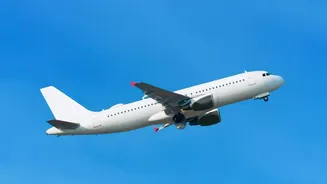





The Planned Delay: Holding Patterns
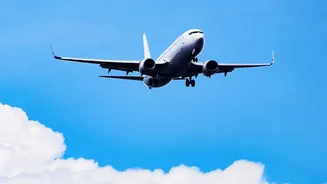
The most common reason for circling is a 'holding pattern'. Think of it as an orderly, invisible waiting room in the sky. Air Traffic Control (ATC) directs aircraft into these predetermined, racetrack-shaped paths to manage the flow of traffic. This happens
frequently at busy airports where multiple planes are scheduled to land around the same time. To maintain safe spacing, ATC will 'stack' aircraft at different altitudes, allowing them to land one by one as the runway becomes available. So, rather than a sign of chaos, a holding pattern is a highly structured procedure to ensure every plane has a clear and safe path to the runway.
Weather and Runway Conditions
Another major factor is weather. A sudden shift in wind, a patch of dense fog, or a fast-moving storm can make an immediate landing unsafe. When this occurs, ATC might place incoming flights into a holding pattern until conditions improve. It’s a way of pausing the approach without compromising safety. Similarly, the runway itself might be temporarily unavailable. This could be due to a slow-moving aircraft that has just landed, a routine inspection, debris removal, or even wildlife wandering onto the tarmac. In these cases, circling provides a safe buffer, allowing ground crews time to clear the issue before your flight makes its final approach.
The 'Go-Around': A Safety Reset
Sometimes a plane is just moments from touchdown when the pilot decides to abort the landing. This is called a 'go-around', and it is a fundamental safety maneuver. It happens if the approach is 'unstable'—meaning the plane is too high, too fast, or not perfectly aligned with the runway. A go-around might also be initiated by ATC if the required separation distance from the plane ahead is not met. Instead of attempting a risky landing, the pilot applies power, climbs to a safe altitude, and circles back to try again under better conditions. Far from being a mistake, a go-around is a sign of a disciplined pilot prioritizing a safe touchdown over a quick one.
Burning Fuel: A Precautionary Measure
In rarer situations, particularly on long-haul flights, an aircraft might need to return to its departure airport shortly after takeoff due to a minor technical issue or a medical emergency. Commercial jets have a maximum landing weight that is lower than their maximum takeoff weight. If the plane is too heavy, landing can put excess stress on the landing gear. To resolve this, pilots may need to circle at a low altitude to burn off fuel and reduce the aircraft's weight to a safe level for landing. This is a controlled, deliberate procedure to ensure the aircraft can land without issue, and it is not the same as 'dumping' fuel, which is an extremely rare emergency measure.