



More Than Just Mined
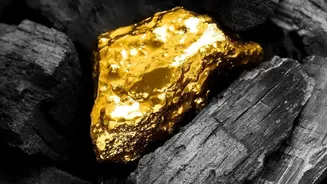
When we think of precious metals, we picture mining operations digging deep into the Earth's crust. It’s a natural assumption that these valuable elements are a native part of our planet. The reality, however, is far more dramatic and cosmic. The fundamental
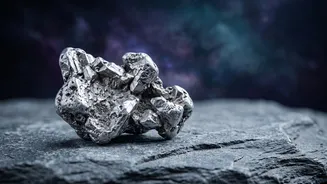
processes that formed the Earth simply could not produce elements as heavy as gold, platinum, or uranium. When our planet was a molten ball, heavier elements like iron sank to the core, but the truly precious, super-heavy elements were not part of the initial recipe. Their presence in the crust, where we can actually find them, points to an origin story that is literally out of this world.
The Stellar Furnaces
To understand where gold comes from, we first have to look at the stars. The universe began with only the lightest elements: hydrogen, helium, and a trace of lithium. All other elements were created inside stars through nuclear fusion. For most of their lives, stars are giant fusion reactors, smashing lighter elements together to create heavier ones. A star like our Sun fuses hydrogen into helium. More massive stars can continue this process, creating carbon, oxygen, neon, and so on, in concentric layers like an onion. This process continues, forging progressively heavier elements until it reaches a critical roadblock: iron.
Beyond the Iron Limit
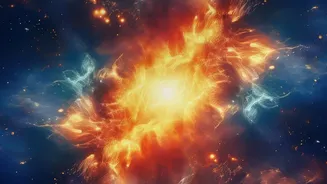
Creating elements through fusion releases a tremendous amount of energy, which is what keeps a star from collapsing under its own gravity. But when it comes to iron, the equation flips. Fusing iron atoms into anything heavier consumes energy instead of releasing it. At this point, the star's core fusion engine shuts down, leading to a catastrophic collapse and a supernova explosion. For decades, scientists thought these explosions were the primary source of heavy elements. While they do create some, supernovae alone cannot account for the sheer abundance of elements like gold and platinum we see in the universe. A more extreme event was needed.
A Cataclysmic Birth
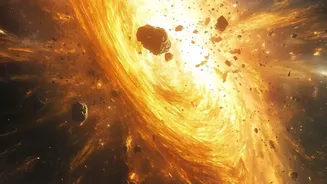
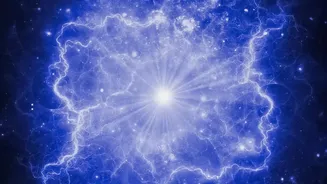
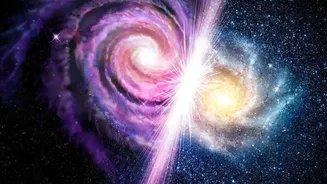
The answer, scientists now widely agree, lies in one of the most violent events imaginable: the merger of two neutron stars. Neutron stars are the ultra-dense collapsed cores left behind after massive stars go supernova. When two of these city-sized but sun-mass objects, locked in a binary orbit, finally spiral into each other, the collision unleashes an almost incomprehensible torrent of energy and particles. This environment is perfect for a process called rapid neutron capture, or the 'r-process'. Atomic nuclei are flooded with neutrons so quickly they can swell into the heaviest elements before they have a chance to decay, forging vast quantities of gold, platinum, and other precious metals in mere seconds. The first direct observation of such a merger in 2017, which produced a flash of light containing the signatures of these very metals, confirmed that these kilonova events are cosmic goldmines.
A Special Delivery
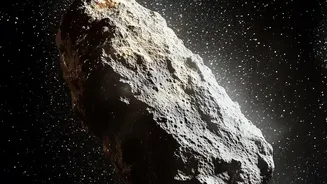
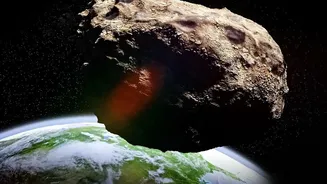
These cataclysmic collisions seeded the cosmos with heavy elements. The gold, platinum, and uranium were blasted across space, mixing into the clouds of gas and dust that would eventually form new stars and planetary systems, including our own. These materials were part of the cocktail that formed Earth 4.5 billion years ago. Most of these heavy elements, being dense, sank to the planet's core. The accessible precious metals we find in the crust and mantle today are believed to be the result of a later 'special delivery,' arriving via asteroid impacts millions of years after Earth formed. A molten magma ocean created by these impacts helped trap the metals near the surface, preventing them from sinking to the core and making them available for future discovery.