






A GPS for the Moon
Navigating on Earth is something most of us take for granted. A quick look at a smartphone gives us our precise location, thanks to the Global Positioning System (GPS). The Moon, however, has no such convenience. For the Apollo astronauts, navigation
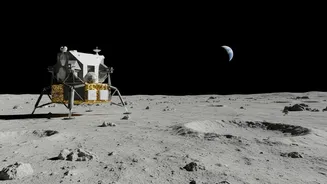
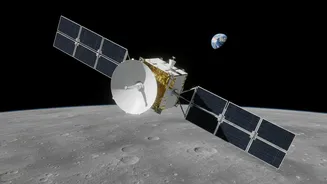
was a complex process heavily reliant on constant communication with Mission Control on Earth. As NASA plans to establish a sustained human presence on the Moon under the Artemis program, this reliance on Earth becomes a bottleneck. To solve this, NASA is developing autonomous navigation systems, essentially a dedicated GPS for the Moon. One key piece of this puzzle is the Lunar Node-1 (LN-1), a navigation beacon designed to provide positioning data to spacecraft and astronauts without them having to phone home. This technology is part of a broader push to create a robust communications and navigation infrastructure that will be critical for the safety and success of future lunar missions.
How Lunar Navigation Works
Creating a GPS-like system for the Moon isn't as simple as launching a few satellites. The headline technology refers to several payloads designed to create a workable lunar network. One recent development is the NavCube3-mini, a compact receiver weighing just 3.5 pounds. This device is engineered to do something remarkable: catch the faint, spillover signals from Earth's existing GPS and Galileo navigation satellites. These signals are not intended to reach the Moon, but with highly sensitive receivers, they can be used to calculate a position autonomously. The NavCube3-mini will be tested on one of Intuitive Machines' Altus-1 lunar relay satellites, which are being developed to provide a communications link for missions. This acts as a bridge technology, offering navigation capabilities before a full, independent lunar satellite network is operational. Another component, Lunar Node-1 (LN-1), acts as a surface beacon, transmitting a reference signal that rovers or astronauts can use to determine their location relative to a fixed point, much like a lighthouse.
The Challenge of the South Pole
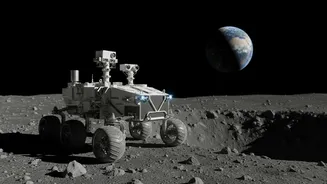
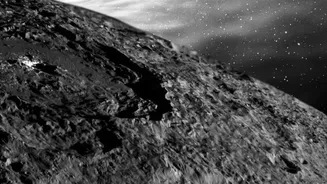
The focus for NASA's Artemis missions and future lunar settlement is the Moon's South Pole. This region is tantalizing because of the presence of water ice in permanently shadowed craters—a vital resource for future long-term stays. However, it is also an incredibly challenging and dangerous environment to navigate. The terrain is rugged, mountainous, and pocked with deep craters. The low angle of the sun creates long, dark shadows that can hide hazards like boulders and steep slopes. These permanently shadowed regions also experience extreme cold, and the cratered landscape can easily block direct communication signals to Earth. A soft landing, critical for preserving delicate scientific instruments, becomes immensely difficult when you cannot be sure of your exact location or the terrain below. An autonomous navigation system that does not rely on a clear line of sight to Earth is therefore not just a convenience; it is a fundamental safety requirement for exploring the South Pole.
Paving the Way for Artemis
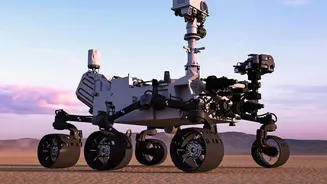
The development of these navigation payloads is directly tied to the goals of the Artemis program, which aims to land astronauts on the Moon, including at the South Pole, and eventually establish a permanent base. For astronauts conducting geological fieldwork, driving rovers, or constructing habitats, knowing their precise location is paramount. This technology will allow rovers to navigate autonomously and enable astronauts to explore farther from their lander with confidence. By providing reliable position, navigation, and timing (PNT) data, this new infrastructure will support everything from orbital maneuvers and precision landings to surface operations. It represents a shift from the temporary sorties of the Apollo era to a sustainable, long-term presence. This lunar network, developed through partnerships with commercial companies like Intuitive Machines, also lays the groundwork for a future lunar economy, where commercial entities can offer navigation and communication services to various missions.