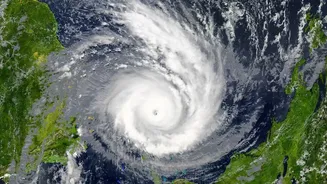







Our Oceans Are Running a Fever
For years, scientists have warned that our oceans are absorbing the vast majority of excess heat trapped by greenhouse gases—over 90%, according to researchers. This has led to a steady and accelerating rise in ocean temperatures since the 1990s. In 2025,
oceans stored a record-breaking amount of heat, and 2026 is continuing this alarming trend with global sea surface temperatures hitting new highs for the time of year. June 2026 was the warmest June on record for the global ocean. These aren't just abstract numbers; they manifest as widespread marine heatwaves—prolonged periods of abnormally high water temperatures—which are now more frequent, intense, and longer-lasting. Events in the North Atlantic, Mediterranean, and the Pacific are particularly notable, with the developing strong El Niño in 2026 adding even more heat to the system.
How Ocean Heat Fuels Land Heatwaves
The link between a hot ocean and scorching land is direct and potent. Warmer ocean surfaces lead to increased evaporation, pumping more moisture into the atmosphere. This warm, moist air acts like a heavy blanket over coastal and even inland areas, raising humidity and making the heat feel much more oppressive. This process can also fuel the formation of persistent high-pressure systems, often called 'heat domes', that trap hot air over a region for days or weeks, leading to sustained and dangerous heatwaves. Furthermore, these superheated ocean conditions can disrupt global atmospheric circulation and alter weather patterns that entire continents rely on. For India, this has significant implications for the life-giving monsoon rains.
A Dangerous Feedback Loop for India
The situation is particularly critical for the Indian subcontinent. The Indian Ocean is among the fastest-warming ocean basins in the world. Scientists are closely watching the interplay between a potentially strong El Niño in the Pacific and a 'positive' Indian Ocean Dipole (IOD), where the western Indian Ocean is warmer than the east. While a positive IOD can sometimes boost monsoon rainfall, the overpowering strength of the 2026 El Niño, amplified by baseline global warming, raises serious concerns. Forecasters have warned of a potential for a weaker monsoon and prolonged heatwaves. This creates a vicious cycle: less rain and hotter days on land can further warm the surrounding seas, which in turn feeds back into more extreme heat on land.
Living with the New Normal
The consequences of this ocean-land heat connection are already being felt. Cities across India are experiencing heatwaves that are not just hotter but are also starting earlier and lasting longer. This puts immense strain on public health, water resources, and agriculture. The increased frequency of marine heatwaves in the Indian Ocean is projected to rise from an average of 20 days per year to over 200 days per year by 2050. This isn't just an environmental issue; it's a direct threat to livelihoods and food security, as it impacts everything from fisheries to crop yields. Understanding that the heat we feel on a blistering day in Delhi or Chennai is connected to the temperature of water thousands of kilometres away is crucial for adapting to our changing climate.