





What is Stone Balancing?
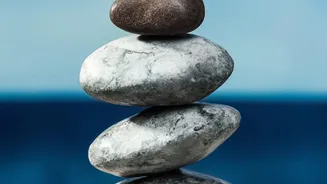
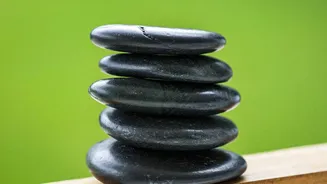
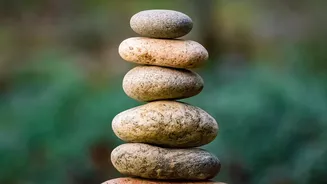
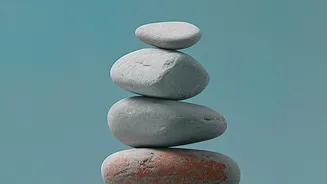
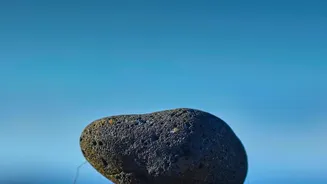
Stone balancing is the art of arranging natural stones in improbable formations without using any adhesives, wires, or supports. The practice relies solely on gravity and the skill of the balancer to find each stone's natural point of equilibrium. It's
an ancient art form with roots in various cultures, where such stacks have served as everything from trail markers to symbols of spiritual harmony. Unlike simply piling rocks, true balancing involves finding minute contact points, often requiring intense concentration to create a structure that appears delicate yet is held together by pure physics. Each creation is temporary, a fleeting moment of stability that is as much about the process as the final product.
A Practice in Active Meditation
More than a creative hobby, stone balancing is often described as a form of active meditation. The intense concentration required to find a stone's balance point forces the mind to become quiet and fully present. Practitioners often report entering a state where external distractions fade away, and the only thing that matters is the connection between their hands, the stones, and the force of gravity. This deep focus can help reduce stress and anxiety, offering a natural way to calm a busy mind. In a world of constant digital noise, the simple, tactile act of engaging with nature in this way provides a powerful grounding experience.
The Essential Role of Patience
Success in stone balancing is impossible without a healthy dose of patience. The process is one of trial and error; structures will inevitably tumble, often multiple times. Rather than a source of frustration, these collapses are seen as part of the practice. Each failure is a lesson in letting go of attachment and ego. Rebuilding requires a calm, steady hand and a willingness to start over. This repeated exercise in perseverance strengthens mental resilience. Learning to accept the impermanence of each creation teaches a valuable lesson: the goal is not to build a permanent monument, but to engage in the mindful journey of its creation.
Developing Focus and Coordination
The physical demands of stone balancing directly translate into improved focus and coordination. The act of placing a stone requires precise hand-eye coordination and the ability to make micro-adjustments based on tactile feedback. Balancers learn to feel the subtle shifts in weight and find the almost imperceptible 'click' when a stone settles into its balance point. This hones both fine motor skills and the ability to concentrate on a single task for extended periods. Regularly engaging in this activity can enhance mental clarity and sharpen focus, skills that are beneficial in all aspects of daily life.
Connecting with the Natural World
At its heart, stone balancing is about a unique interaction with the natural world. It encourages you to slow down and observe your surroundings, to notice the unique shape, texture, and weight of each stone. Practitioners often speak of a dialogue with the stones, learning to understand their properties to find a harmonious balance. If you decide to try it, the only equipment you need is a bit of time and a place with stones. Beginners are advised to start simple, perhaps by balancing a single stone on its end, before attempting more complex stacks. The key is to approach it with an open mind and respect for the environment, leaving the landscape as you found it.