






The Blueprint for a New Generation
The phrase 'advanced-course network' doesn't refer to a single entity, but rather a collection of ambitious national initiatives designed to transform education. This ecosystem is a direct outcome of the National Education Policy (NEP) 2020, which champions
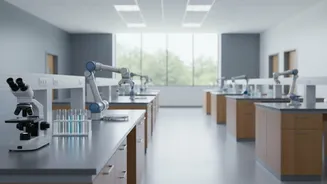
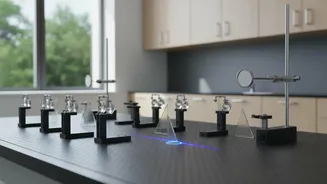
a move towards practical, inquiry-based learning. Key components of this network include the Atal Innovation Mission's Atal Tinkering Labs (ATLs) for schools and the government’s push to upgrade thousands of institutions into PM SHRI (Schools for Rising India) schools, equipped with modern lab facilities. The goal is to create an environment where students don't just read about science but actively engage with it, fostering skills like critical thinking, creativity, and problem-solving from a young age.
Atal Tinkering Labs: The Innovation Hubs
Atal Tinkering Labs are at the forefront of this movement in school education. These workspaces, set up in schools across the country, provide students from Grade 6 to 12 with tools and equipment for hands-on experimentation in fields like robotics, electronics, and 3D printing. As of late 2025, over 10,000 such labs were established, reaching more than a crore of students. The government has even more ambitious plans, announcing the rollout of 50,000 more ATLs in government schools between 2025 and 2030, marking a significant investment in nurturing a culture of innovation at the grassroots level. These labs are not just about building gadgets; they are designed to cultivate a mindset of curiosity and experimentation.
PM SHRI Schools: A Model for Excellence
The PM SHRI scheme aims to upgrade over 14,500 existing government schools, turning them into exemplars that showcase all facets of the NEP 2020. A significant part of this Rs 27,360-crore project focuses on infrastructure, especially fully equipped science labs, computer labs, and even skill labs. These schools are intended to serve as beacons, demonstrating best practices in experiential learning and providing leadership to other schools in their vicinity. The emphasis is on creating holistic learning environments with not just science equipment but also resources for AI, coding, and digital fabrication, preparing students for 21st-century careers.
The Rise of Virtual Labs
Recognizing that building physical labs everywhere is a monumental challenge, India has also heavily invested in digital solutions. The Virtual Labs project, an initiative by the Ministry of Education, provides remote access to high-quality laboratory simulations for students from the undergraduate to the research level. This allows students in colleges with limited facilities to perform experiments online, manipulate variables, and understand complex concepts. Requiring only a computer and an internet connection, these virtual labs cover a wide range of disciplines, from engineering to physical sciences, democratizing access to practical education and complementing physical lab infrastructure.
Persistent Challenges on the Ground
Despite these ambitious programs, significant hurdles remain. A long-standing issue in Indian science education has been the gap between theory and practice, with many schools, particularly in rural areas, having poorly equipped or non-existent labs. Even when infrastructure is built, ensuring its maintenance, providing adequate funding for consumables, and, most importantly, training teachers to use these new tools effectively are major challenges. The success of this expanding network hinges not just on building labs but on creating a supportive ecosystem that includes continuous teacher training and a curriculum that genuinely integrates hands-on work.