







A Groundbreaking Test for a New Rocket
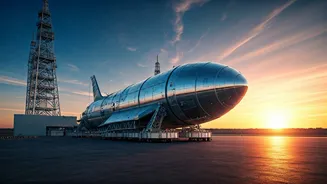
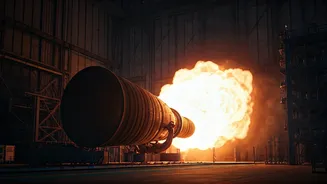
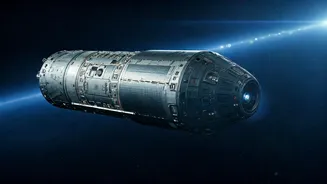
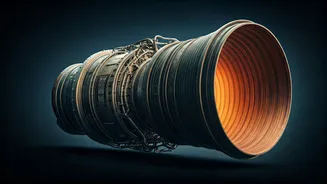
The Indian Space Research Organisation (ISRO) successfully conducted the first ground test of a new solid rocket motor on July 3, 2026, at the Satish Dhawan Space Centre in Sriharikota. This motor is the heart of a new vehicle named SOLVE, which stands
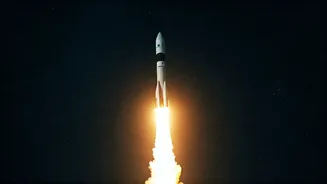
for Sub-Orbital Launch Vehicle for Experiments. Unlike the massive rockets that will launch the final mission, SOLVE is a smaller, dedicated vehicle designed for a very specific and critical purpose: to test the systems that will bring the astronauts safely back to Earth. The successful static firing, where the motor was tested on the ground, confirmed that its performance met all expected parameters, paving the way for future flight tests.
The Crucial Science of a Safe Return
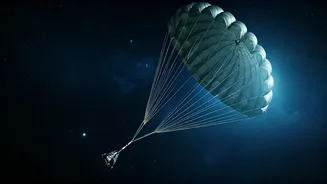
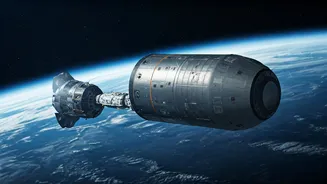
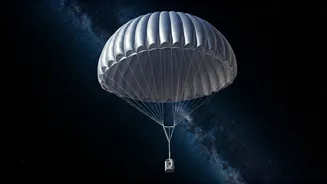
In human spaceflight, returning the crew safely is just as important as launching them. The primary job of the new SOLVE rocket will be to validate the Gaganyaan crew module's parachute system—one of the most critical safety elements. During these test missions, SOLVE will carry a replica of the crew module to an altitude between 10 and 17 kilometres. Once it separates from the rocket, a complex sequence involving ten different parachutes will deploy to systematically slow the capsule's descent before it makes a gentle splashdown in the sea. Developing a dedicated test vehicle like SOLVE gives ISRO the flexibility to conduct these parachute tests repeatedly and under various simulated conditions, ensuring the system is robust and reliable before any human flies.
Ingenuity and Adaptation in Action
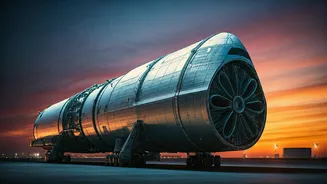
In a move characteristic of ISRO's famed frugal engineering, the solid motor for the SOLVE vehicle is not an entirely new design. It is a modified version of the reliable strap-on motors used on India's workhorse rocket, the Polar Satellite Launch Vehicle (PSLV). However, engineers have made significant changes to suit the specific needs of Gaganyaan's testing. These modifications include developing a slower-burning propellant to achieve the right flight profile and adding a secondary injection thrust vector control system, which allows for better steering during the sub-orbital flight. This approach of adapting proven technology saves both time and resources while ensuring a high degree of reliability.
The Long Road to Launch
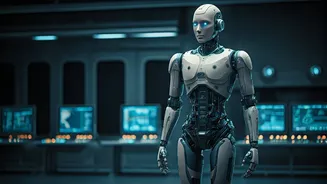
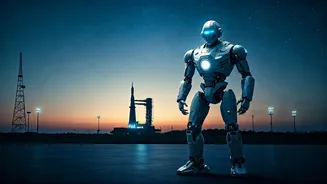
This successful motor test is one of many milestones in the comprehensive Gaganyaan programme. ISRO has already conducted thousands of tests covering everything from life support systems to crew escape mechanisms. The overall plan for Gaganyaan involves sending a crew of three into a 400-kilometre orbit for a three-day mission and returning them safely to Indian waters. Before the first crewed flight, ISRO will conduct a series of uncrewed missions to validate the performance of all systems in real-world conditions. These flights, including one featuring the humanoid robot 'Vyommitra', are essential dress rehearsals that will provide invaluable data and ensure every aspect of the mission is ready for its human crew.
Joining an Elite Global Club
The Gaganyaan mission is more than just a technological challenge; it is a statement of India's growing capabilities in space exploration. Upon successful completion, India will become only the fourth nation in the world—after Russia, the United States, and China—to independently send humans into space. This achievement would cement India's status as a major space-faring power and open up new avenues for scientific research, technological development, and international collaboration. Each successful test, like the recent firing of the SOLVE motor, is a confident step toward that historic goal, showcasing the nation's scientific prowess and determination on the global stage.