






The Foundation: Mumbai-Ahmedabad
To understand where India's bullet train network is going, it is essential to look at where it started. The Mumbai-Ahmedabad High-Speed Rail (MAHSR) corridor is the nation's flagship bullet train project, serving as the blueprint for future expansion.
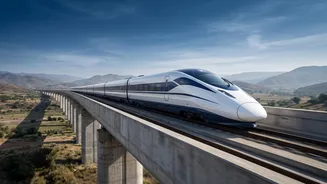
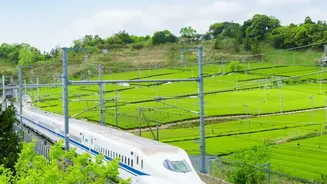
This 508-kilometre line, built with Japanese Shinkansen technology, is designed to slash travel time between the two financial hubs to about two hours. As construction on this line advances, with significant progress on viaducts and stations, the National High Speed Rail Corporation Limited (NHSRCL) is leveraging the experience gained for a much larger, national vision. This pioneering project is not just about a single route; it is creating a template for engineering, procurement, and operations that will be scaled across the country.
A New Hub: Delhi at the Centre
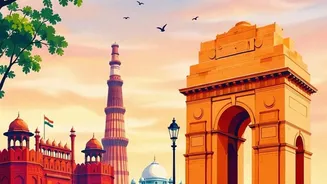
The next chapter of India's high-speed rail story is centered on the national capital. In late October 2026, the government announced its approval for the Northern Bullet Train Corridor, a massive undertaking aiming to connect Delhi with Guwahati in Assam via several major cities. This expansive network is envisioned to unfold in phases. Key proposed routes include the Delhi-Varanasi and Delhi-Amritsar corridors, which are currently in the planning and Detailed Project Report (DPR) stages. The Delhi-Varanasi section, approximately 813 km long, is planned to pass through major Uttar Pradesh hubs like Agra, Lucknow, and Prayagraj. The Delhi-Amritsar corridor, around 465 km, aims to connect the capital with Punjab's economic centers, including a spur to Chandigarh. These corridors position Delhi as the central hub of a future web of high-speed lines.
Transforming Travel Times and Economies
The primary promise of high-speed rail is a dramatic reduction in travel time. The proposed Delhi-Varanasi journey could be completed in just over three and a half hours, down from more than eight hours on the fastest conventional trains. Similarly, a trip from Delhi to Amritsar could take under two hours. Recent government announcements have highlighted even more granular time savings, such as Delhi to Agra in 59 minutes and Delhi to Kanpur in one hour and 45 minutes. Beyond convenience, this speed is expected to be an economic catalyst. By linking industrial, religious, and tourism centers, the corridors aim to boost commerce, create jobs, and facilitate more efficient movement of people, potentially reducing reliance on road and air travel.
The Long Road Ahead: Challenges and Vision
While the vision is ambitious, the path to a national high-speed rail network is complex and costly. Projects of this scale face significant hurdles, including land acquisition, securing massive funding, and intricate engineering challenges. The Union Budget for 2026-27 identified seven high-speed corridors, representing a total investment of around ₹16 lakh crore, highlighting the financial commitment required. The Delhi-Varanasi and Delhi-Amritsar corridors are currently in the DPR preparation and approval stages, meaning major construction has not yet begun. The process involves detailed surveys, environmental assessments, and finalising alignments before land acquisition can even start.
Part of a National Strategy
These northern corridors are not standalone projects but integral parts of India's long-term National Rail Plan and the grander Diamond Quadrilateral vision. This strategy aims to connect the major metropolitan hubs of Delhi, Mumbai, Chennai, and Kolkata with high-speed lines, creating a national grid for fast, efficient, and sustainable passenger transport. By developing corridors radiating from key hubs like Delhi, the NHSRCL is methodically building a network that will eventually interconnect the country's largest economic centers. The recent approval to extend the northern corridor all the way to Guwahati underscores this strategic objective, aiming to enhance connectivity with Northeast India and integrate it more closely with the national economy.