






A Workout for Body and Brain
At its core, dancing is a holistic activity. It’s not just physical exertion; it’s a complex interplay of rhythm, movement, memory, and spatial awareness. When you dance, especially in a group, you are asking your body and brain to work in perfect harmony.
You must listen to the music, remember the steps, coordinate your limbs, navigate your space, and often synchronize with a partner or an entire class. This rich, multi-sensory experience is what makes it uniquely effective at boosting both physical prowess and mental sharpness.
Mastering Physical Coordination
Group dancing is an exceptional tool for refining physical coordination. Learning choreography requires you to execute specific movements in a set sequence, which builds muscle memory over time. This repeated practice strengthens the neural pathways between your brain and muscles, leading to smoother, more efficient movements both on and off the dance floor. Furthermore, dancing constantly challenges your balance and core stability. Whether it's a simple weight shift in a folk dance or a complex turn in ballroom, you are continuously training your body to maintain its center of gravity. This strengthens core muscles and improves proprioception—your sense of where your body is in space—which is crucial for preventing falls, especially as we age.
Sharpening the Cognitive Edge
The mental workout from dancing is just as impressive as the physical one. Learning and recalling choreography is a direct exercise for the hippocampus, the brain region responsible for memory. But the benefits don't stop there. Dancing requires rapid, split-second decision-making. You have to think on your feet, adjusting your movements based on the music, your partner, and others around you. This process enhances cognitive flexibility and processing speed. Studies have shown that the unique combination of physical, mental, and social stimulation in dancing is associated with a reduced risk of dementia, making it one of the most effective activities for preserving cognitive function in later life.
The Unique Power of the Group
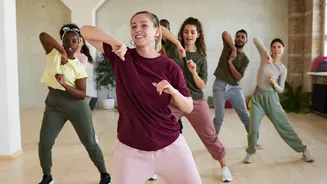
While any dancing is good, dancing in a group adds another layer of benefits. Moving in synchrony with others fosters a powerful sense of connection and social bonding. This shared experience can lead to the release of endorphins, boosting mood and reducing stress. Coordinating with others also adds a layer of cognitive challenge. You must be aware not only of your own movements but also of those around you, enhancing spatial awareness and non-verbal communication skills. This teamwork aspect teaches you to anticipate and respond to others, improving social cognition and even empathy.
Ageless Benefits for Everyone
One of the most beautiful aspects of group dancing is its universal accessibility and appeal. For children, it's a playful way to develop gross and fine motor skills, body awareness, and social skills like cooperation. For adults, it’s a fun and engaging escape from daily stressors that also serves as excellent cardiovascular exercise. For older adults, low-impact styles like ballroom or line dancing offer a safe way to improve balance, maintain mobility, and stay socially engaged, all while protecting long-term brain health. The joy, community, and comprehensive health benefits make it a truly ageless activity.