



An Unprecedented Catastrophe
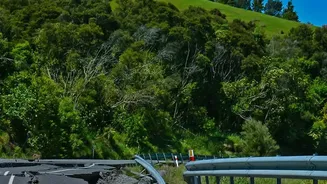
On August 26, 2026, a devastating flash flood tore through river valleys near the Nepal-China border, leaving a trail of destruction. Initial reports tallied hundreds of lives lost, with many more missing, including locals, tourists, and pilgrims. The
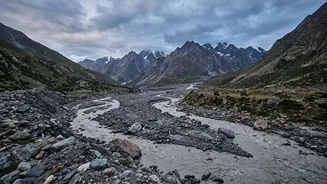
sheer volume and force of the flood, which destroyed buildings and swept away bridges, was shocking. Water levels in rivers like the Trishuli surged dramatically—rising by as much as 30 feet in just 30 minutes in some areas, indicating an event far more complex than a simple monsoon downpour.
The Puzzle in the Peaks
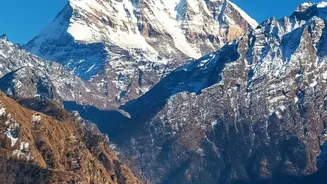
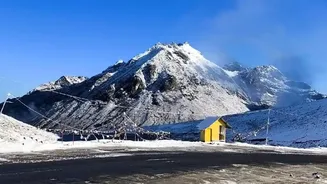
In the immediate aftermath, there was confusion about the cause. The event was so powerful it generated seismic signals equivalent to a magnitude 5.2 earthquake, leading the U.S. Geological Survey (USGS) to first suspect a tectonic event. However, further analysis of satellite imagery and seismic waves ruled out an earthquake. Instead, the evidence pointed to something happening high in the mountains of the Langtang region—a massive collapse of rock and ice. This wasn't a typical landslide; it was a catastrophic failure on a scale that could only be explained by a new and terrifying phenomenon.
What is a High-Altitude Collapse?
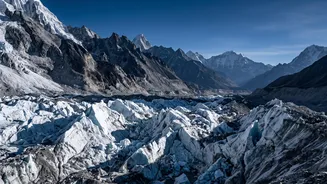
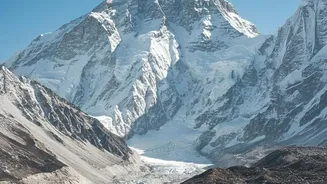
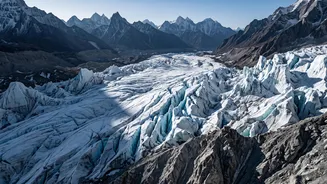
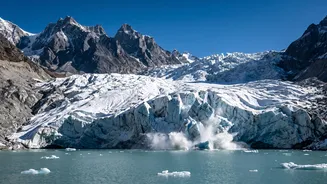
Scientists now believe the disaster was a 'hazard cascade' initiated by a high-altitude collapse. This occurs when a massive section of a mountain, often including a glacier, breaks away. Satellite images from before and after the event show a huge piece of a glacier, estimated to be around 2 million square feet, detaching from a peak nearly 4,000 feet above the valley floor. This enormous mass of ice and rock plunged into the valley, where the force of the impact pulverized the ice, generating a huge amount of water. This torrent may have then temporarily blocked the Lhende River, creating a natural dam that, upon bursting, unleashed the catastrophic flood downstream.
The Climate Change Connection
While no single disaster can be solely attributed to climate change, experts agree it is a critical factor in making these events more likely. The Himalayas are warming at a rate faster than the global average. This warming doesn't just melt glaciers, creating unstable lakes; it also thaws high-altitude permafrost. Permafrost is the frozen ground that acts like a 'cryospheric glue', holding rock and soil together on steep slopes. As this glue melts, the mountains themselves become less stable, increasing the risk of massive rock and ice avalanches.
A Warning for the 'Third Pole'
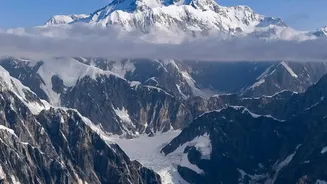
This event is a stark warning. The Hindu Kush Himalaya region, often called the 'Third Pole', holds the largest volume of ice outside the polar regions and is the source of ten major Asian river systems that support billions of people, including in India. Past disasters, like the 2021 Melamchi flood and the 2012 Seti River disaster, also involved complex cascades of landslides and water. The increasing frequency of these compound disasters highlights a growing threat. As the mountains become more unstable, communities across the entire region face a future where floods can be triggered not just by rain, but by the very collapse of the peaks above them. This new reality demands better high-altitude monitoring and urgent regional cooperation to mitigate the risks.