
Beyond the Six-Pack: Your Deep Core
A strong core is more than just visible abdominal muscles. It's a complex system of deep muscles that act as a natural corset for your torso, protecting your spine and enabling powerful movement. The side plank specifically targets some of the most important,
yet often neglected, of these muscles. The primary muscles engaged are your obliques, which run along the sides of your torso. These are crucial for rotational movements and resisting side-bending forces. Beneath them lies the transverse abdominis, your deepest core muscle, which wraps around your midsection to stabilize the spine and pelvis. The exercise also engages the quadratus lumborum, a deep lower back muscle essential for spinal stability.
The Critical Link Between Core and Hips
Your core and hips work together as a unit. When your deep core muscles are weak, your body often compensates, leading to instability in the pelvis. This can manifest as lower back pain, poor balance, or even knee strain, as other muscles are forced to take on a stabilizing role they weren't designed for. The side plank is exceptional because it strengthens the core while simultaneously firing up key hip stabilizers, particularly the gluteus medius. This muscle, located on the outer side of your hip, is vital for keeping your pelvis level when you walk, run, or climb stairs. By training these muscle groups to work in unison, you build a foundation for safer, more efficient movement in both daily activities and sports.
How to Perform the Perfect Side Plank
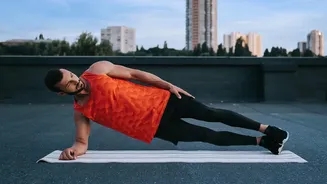
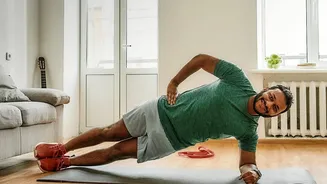
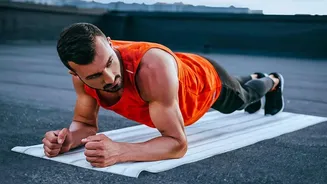
Proper form is crucial to reap the benefits and avoid injury. Follow these steps for a textbook side plank: 1. Lie on your side with your legs straight and stacked one on top of the other. Place your forearm on the floor with your elbow directly beneath your shoulder. 2. Engage your core by drawing your belly button toward your spine. Push through your forearm and the side of your bottom foot to lift your hips off the floor. 3. Your body should form a straight, rigid line from your head to your feet. Avoid letting your hips sag or pushing them too high. 4. Keep your neck in a neutral position by gazing forward, not down at the floor or up at the ceiling. Hold for 20-60 seconds, focusing on quality over duration. 5. Lower your hips back to the floor with control and repeat on the other side.
Common Mistakes to Avoid
Even a simple exercise can be done incorrectly. Watch out for these common errors that can reduce the effectiveness of your side plank and increase injury risk: - Sagging Hips: This is the most frequent mistake. It indicates your core and glutes are not fully engaged. Actively think about lifting your bottom hip toward the ceiling. - Misaligned Shoulder: Placing your elbow too far in front of or behind your shoulder puts unnecessary stress on the joint. Ensure your elbow is stacked directly under your shoulder. - Rotating the Torso: Your chest and hips should face directly forward, not tilt toward the ground or ceiling. Keeping your shoulders and hips stacked vertically helps maintain proper alignment. - Holding Your Breath: Remember to breathe steadily throughout the hold. Holding your breath can increase blood pressure and reduce stability.
Variations for Every Fitness Level
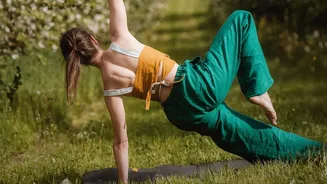
The side plank can be easily modified to suit your current strength level. For beginners, the Bent-Knee Side Plank is an excellent starting point. By performing the exercise with your knees bent and stacked, you reduce the load and can focus on perfecting your form. As you get stronger, you can progress to the full version. For an added challenge, advanced individuals can try variations like Side Plank Hip Dips, where you lower and lift your hips in a controlled motion, or a Side Plank with a Leg Raise, lifting your top leg to further challenge your hip stabilizers. These progressions ensure you can continue to build strength over time.