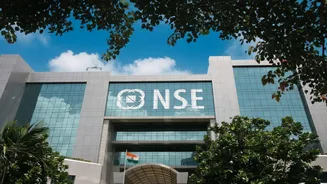










The IPO Everyone Is Watching
The National Stock Exchange (NSE) is targeting a September 2026 launch for its initial public offering, an event that has been in discussion for the better part of a decade. With an estimated size of around ₹30,000 crore, the IPO is poised to become the largest
public issue in Indian history, surpassing the record set by Hyundai Motor India's ₹27,870-crore offering in 2024. The mega-listing is expected to value the exchange at over ₹5 lakh crore, a figure that would instantly place it among India's most valuable companies. The exchange formally kickstarted the process by filing its Draft Red Herring Prospectus (DRHP) with the market regulator, SEBI, in June 2026, setting the stage for investor roadshows across the globe.
An Offer For Sale, Not For Capital
Unlike many IPOs where companies raise money for expansion, the NSE's public issue is a 100% Offer for Sale (OFS). This means the exchange itself will not receive any of the proceeds. Instead, the money will go to existing shareholders who are selling their stakes. According to the draft papers, these shareholders will collectively divest nearly 6% of the exchange's equity. Major institutions like the State Bank of India (SBI) are among the sellers, while Life Insurance Corporation of India (LIC), the single largest shareholder, has chosen not to sell its shares in this offering. The structure allows early investors to monetise their holdings while giving the public a chance to own a piece of the country's primary market infrastructure.
The Long and Winding Road to Listing
The journey to this IPO has been fraught with challenges. The NSE first filed to go public back in 2016, but the plan was derailed by a major governance controversy known as the co-location case. SEBI launched an investigation into allegations that certain brokers were given unfair preferential access to NSE's servers, allowing them to get price information milliseconds faster than others—a huge advantage in high-frequency trading. This led to a years-long regulatory deadlock, with SEBI halting the listing due to the unresolved governance concerns. In the years since, the NSE has undergone significant changes in management and compliance, and recently proposed a settlement of nearly ₹1,500 crore to close the chapter on the co-location matter.
Why This is a Landmark Moment
An IPO for the NSE is significant because it allows investors to own a stake in the market's underlying machinery. The exchange operates as a near-monopoly in several key areas. It handles over 90% of cash market trading and has a staggering 99.79% market share in equity futures. Whether the market goes up or down, the exchange earns revenue from every transaction. During the decade it was unable to list, the NSE's business grew exponentially: its revenue from operations soared and its base of registered investors expanded from 2 crore to over 12 crore. The listing, which will ironically take place on its rival exchange, the BSE, also brings one of the nation's most critical financial institutions under the full transparency requirements of a publicly-traded company.
What It Means for Retail Investors
For retail investors, this IPO presents a unique opportunity. The DRHP has specified a reservation of 35% of the net offer for retail individual investors, ensuring significant participation. However, investing in an exchange comes with its own set of considerations. The NSE's profitability is heavily dependent on trading volumes, especially in the lucrative derivatives segment. Any regulatory changes, such as an increase in Securities Transaction Tax (STT) or new rules curbing derivatives trading, could impact its revenue. Furthermore, as a technology-driven company, it faces constant operational risks like server glitches and cybersecurity threats. While the excitement is high, potential investors will need to weigh its dominant market position against these regulatory and operational risks.