







Why October is Jaipur's Golden Hour
Planning a trip to Jaipur is all about timing, and October is widely considered the sweet spot. The fierce summer heat has subsided, and the monsoon rains have washed the dust from the sky, leaving the air crisp and clear. Daytime temperatures are pleasant,
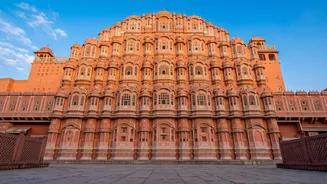
perfect for exploring the city's wonders without the exhaustion of peak summer. But the real magic happens in the late afternoon. As the sun begins its descent, it baths the city in a soft, golden light that seems to make the pink-hued buildings glow from within. This post-monsoon clarity creates the perfect conditions for photography and simply soaking in the views, making it the best time for sightseeing.
Nahargarh: The City's Royal Guardian
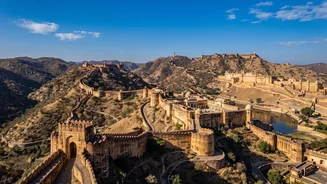
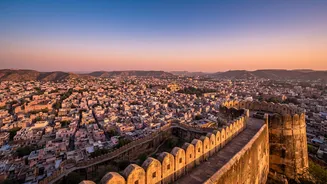
Perched on the Aravalli hills, Nahargarh Fort has stood as a formidable sentinel over Jaipur since it was built in 1734 by Maharaja Sawai Jai Singh II. Originally named Sudarshangarh, it was part of a three-fort defence system alongside Amer and Jaigarh. Though intended for defence, Nahargarh also served as a royal retreat. Its name, meaning 'abode of tigers', adds to its mystique. Today, its elevated position offers what are arguably the most stunning panoramic views of the entire city, making it a place that feels both historic and vibrantly alive.
The Unforgettable Sunset View
As evening approaches, locals and travellers alike make their way up the winding road to the fort. The western ramparts become the main stage for nature's daily spectacle. From this vantage point, you can watch the entire city sprawl out below you. The view encompasses the bustling city, the serene Man Sagar Lake with the floating Jal Mahal, and the rugged Aravalli landscape. As the sun dips below the horizon, the sky explodes in shades of orange, pink, and purple, reflecting off the city's architecture. It is a moment of quiet awe, as the city lights begin to twinkle on one by one, creating a glittering carpet under the darkening sky.
More Than Just a Viewpoint
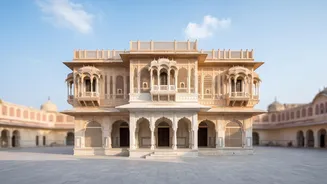
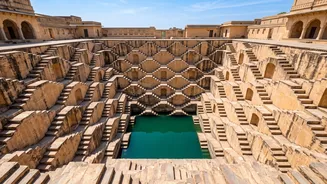
While the sunset is the main draw, the fort itself is worth exploring. The main palace within the walls is Madhavendra Bhawan, a beautiful structure with 12 identical suites built for the queens of Sawai Madho Singh. These apartments are connected by corridors adorned with delicate murals. You can also discover the fort's impressive stepwells, an ancient and beautiful water system. For a different kind of culture, the fort also houses a Sculpture Park and a Wax Museum, though these require separate tickets and have their own hours.
Planning Your Perfect Evening
To make the most of your visit, plan to arrive at least an hour before sunset. The fort itself officially closes at 5:30 PM, but the ramparts and restaurants remain open later. The entrance fee for Indian nationals is around ₹50 and ₹200 for foreign tourists. The best way to get there is by hiring an auto-rickshaw or a taxi for a round trip, as finding transport back down can be difficult. A car will take about 30-40 minutes from the city. Once there, you can find a spot on the fort walls or visit the Padao open-air restaurant. While the food reviews are mixed, it offers a prime location for a drink with an unbeatable view.