







Why Is AI So Power-Hungry?
Unlike a simple web search or sending an email, AI tasks are incredibly complex. Training a large language model or generating an image requires immense computational power. Think of it as the difference between a casual jog and a series of intense sprints.
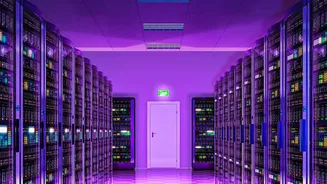
A traditional data centre server rack might use around 10 kilowatts (kW) of power. An AI-ready rack, packed with specialised Graphics Processing Units (GPUs), can draw anywhere from 40 kW to over 100 kW. This means that for the same physical space, AI workloads demand multiple times more electricity to run and significantly more energy to keep cool.
India's Data Centre Explosion
India is rapidly becoming one of the world's most important data centre hubs. This growth is driven by government initiatives like 'Digital India', data localisation policies, the rollout of 5G, and a massive increase in internet usage. From a capacity of just 375 megawatts (MW) in 2020, India's data centre capacity has quadrupled to over 1.6 gigawatts (GW) in 2026. Projections show this is just the beginning, with capacity expected to surge to between 8 and 10 GW by 2030, attracting billions in investment from both domestic giants and global hyperscalers.
Connecting AI to India's Energy Grid
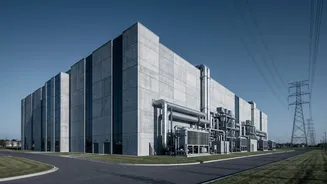
The global AI race is directly fueling the specifications for these new Indian data centres. Builders are no longer just leasing space; they are securing massive power connections to support high-density AI computing. The result is an unprecedented new demand on India's electricity grid. In 2024, data centres accounted for about 0.8% of India's total power consumption. By 2030, that figure is projected to jump to as high as 3%. The Ministry of Power estimates data centres will create an additional demand of over 26 GW by 2031-32, straining local power networks, particularly in hubs like Mumbai, Chennai, and Hyderabad.
A Challenge for Climate Goals
This surge in energy demand presents a significant challenge to India's goal of achieving net-zero emissions by 2070. A single large AI data centre can consume as much electricity as hundreds of thousands of Indian households. If this new demand is met by India's existing coal-heavy grid, it could undermine progress on climate targets. The challenge is not just about generating more power, but about generating clean power. This has created a strain, as highly concentrated data centre clusters can overwhelm local grids that were not designed for such intense, constant loads.
The Search for Sustainable Solutions
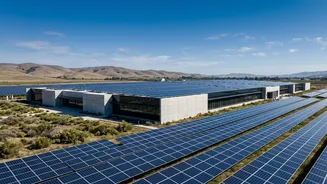
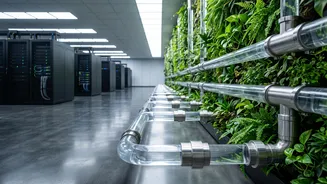
The industry is aware of the problem and is actively seeking solutions. Major tech companies are now among the largest corporate buyers of renewable energy in India, signing long-term agreements to power their facilities. There is a strong push towards building 'green data centres' that integrate energy-efficient design and advanced cooling technologies from the ground up. Innovations like liquid cooling are becoming more common as they can significantly reduce the energy spent on keeping servers from overheating. Some states have also begun tying incentives for data centre construction to the use of renewable energy, pushing the industry toward a more sustainable path.