




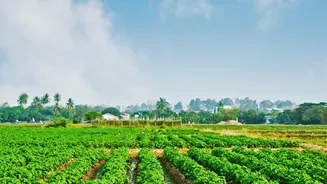


The Scale of the Collapse
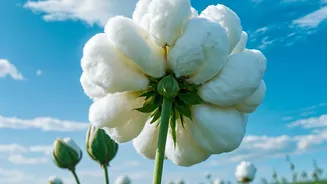
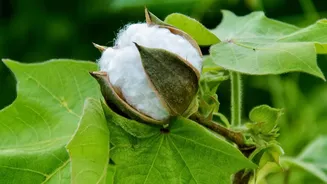
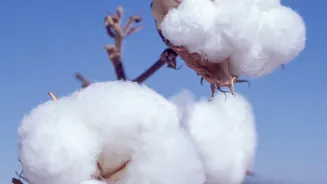
The numbers for the 2026-27 season paint a stark picture of the crisis facing what was once called Punjab's 'white gold'. The state has recorded its lowest-ever cotton sowing area, managing to cover only around 80,000 hectares. This is a dramatic fall
from the 1.19 lakh hectares sown just the previous year and represents a failure to meet even two-thirds of the government's modest target of 1.25 lakh hectares. To put this decline in perspective, Punjab's cotton cultivation has been shrinking for years, but the latest figures represent a new nadir. This sharp turn away from cotton is not just a statistical anomaly; it is a direct challenge to the state's long-standing agricultural policy and has significant economic and environmental implications.
A Crisis of Confidence
Farmers are abandoning cotton for a simple reason: it has become an economically unviable and high-risk crop. For at least five consecutive years, they have battled devastating pest attacks, primarily from the pink bollworm and whitefly, which have ravaged yields and destroyed profits. These recurring infestations have eroded farmer confidence, making the crop a risky gamble. Compounding the problem are poor market returns. Even when farmers manage to produce a crop, they often face prices below the Minimum Support Price (MSP). In 2025, for instance, a staggering 61% of cotton arriving in Punjab's markets was sold below the MSP, crushing any hope of profitability for many. Faced with mounting input costs, unpredictable weather, and unreliable prices, farmers are making a rational economic decision to cut their losses and look elsewhere.
The Unshakeable Appeal of Paddy
As farmers turn their backs on cotton, many are shifting to the one crop that offers a semblance of stability: paddy. While the government has been trying to move agriculture away from this water-intensive crop to conserve Punjab's rapidly depleting groundwater, paddy remains the safer bet for farmers. The reason is twofold. Firstly, paddy cultivation is supported by a robust MSP and an assured government procurement system, which guarantees a buyer and a floor price—a safety net that cotton has failed to provide. Secondly, the state provides free electricity for agriculture, which heavily subsidises the cost of pumping groundwater to irrigate thirsty paddy fields. This combination of guaranteed income and subsidised inputs makes paddy a far more predictable and financially secure option than the volatile cotton market.
A Setback for Diversification
The mass exodus from cotton cultivation represents a significant blow to Punjab's crop diversification programme. The primary goal of this policy is to reduce the state's over-reliance on the paddy-wheat cycle to save precious groundwater. Cotton has always been promoted as a key alternative. Now, with cotton acreage collapsing, more land is expected to be diverted back to paddy, directly undermining the government's conservation efforts. This creates a policy paradox: while the state advocates for diversification, the economic realities on the ground are pushing farmers towards the very crop the state wants to limit. This situation highlights that diversification cannot succeed unless the alternative crops are made as economically attractive and stable as paddy.
Searching for Viable Alternatives
With cotton fading, the government is intensifying its push for other alternatives, with a particular focus on maize. To encourage the shift, the state has expanded a scheme offering a financial incentive of ₹17,500 per hectare for farmers who switch from paddy to maize. The programme, which has been extended to 16 districts, is a clear signal of the government's intent to find a workable substitute for paddy. However, agricultural experts caution that cash incentives alone may not be enough to trigger a large-scale shift. For diversification to truly take root, a comprehensive ecosystem is required, including assured procurement for alternative crops, stable pricing, and the development of related processing industries. Without this support infrastructure, farmers will continue to gravitate towards the safety of paddy, regardless of the environmental cost.