



Sunlight: The Ultimate Priority
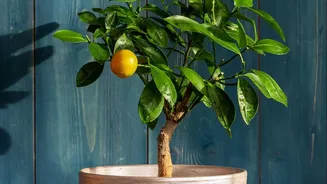
Lemon trees are sun worshippers, plain and simple. For your plant to have any chance of flowering and producing fruit, it needs at least six to eight hours of direct, bright sunlight every day. An ideal spot is near a south-facing window where it can
soak up as much light as possible. If your home doesn't offer that much natural light, especially during darker winter months, you’ll need to supplement with a grow light to prevent the tree from becoming weak and dropping its leaves. When moving your plant outdoors for the summer, acclimate it gradually to prevent the intense, direct sun from scorching its leaves.
Watering: A Delicate Balance
More potted lemon trees are lost to improper watering than any other cause. The golden rule is to water deeply but infrequently, allowing the top two inches of soil to dry out completely between sessions. When you do water, do so thoroughly until you see water escaping from the pot's drainage holes. This encourages a strong, deep root system. Never let the pot sit in a saucer of standing water, as this leads to soggy soil and root rot, which is fatal for citrus. How often you water will change with the seasons; you may water every few days in hot summer weather but only once a week or so in the winter.
Soil and Potting: The Right Foundation
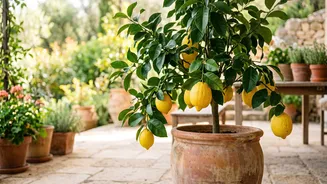
Citrus trees demand excellent drainage. Never use heavy garden soil in a container, as it compacts easily and holds too much water. Instead, opt for a high-quality, well-draining potting mix specifically formulated for citrus, or a mix for cacti and palms. These mixes typically contain ingredients like perlite, sand, or fine bark to ensure water drains freely and roots get the oxygen they need. The pot itself must have ample drainage holes. While plastic pots work, unglazed terracotta is a great choice because its porous nature allows the soil to breathe and dry out more evenly.
Feeding: Nutrients for Growth and Fruit
Plants in containers have limited access to nutrients and rely entirely on you to feed them. Lemon trees are heavy feeders, especially during the active growing season of spring and summer. Use a balanced, slow-release granular fertilizer formulated for citrus trees, or apply a liquid feed every four to six weeks. These fertilizers contain the right ratio of nitrogen for lush foliage, as well as phosphorus and potassium for flowers and fruit. They also include essential micronutrients like iron, zinc, and magnesium, which are crucial for overall health. Reduce or stop fertilizing in the fall and winter when the tree's growth naturally slows.
Pruning: For Shape and Health
Pruning is important for maintaining the tree’s size and shape, especially for indoor plants. The best time to prune is in late winter or early spring, just before new growth starts. Your main goals are to remove any dead, damaged, or crossing branches. Thinning out the center of the tree improves air circulation and allows light to penetrate deeper into the canopy, which encourages more fruit production. You can also pinch the tips of new, leggy growth to encourage the tree to become bushier rather than tall and spindly. Aim to remove no more than a third of the tree's total volume in one year.
Watching for Common Pests
Potted citrus, especially when kept indoors, can attract a few common pests. The most frequent culprits are spider mites, scale insects, aphids, and mealybugs. Regularly inspect your tree, paying close attention to the undersides of leaves and the joints where leaves meet stems. You might see fine webbing (spider mites), small brown bumps (scale), clusters of tiny green or black insects (aphids), or white, cottony masses (mealybugs). Most minor infestations can be managed by wiping the leaves with a cloth dipped in soapy water or by applying a horticultural oil like neem oil, which is a safe and effective treatment.