
More Than Just a Snowslide
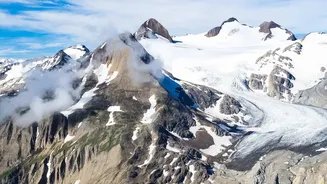
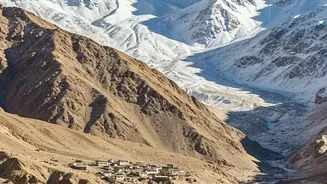
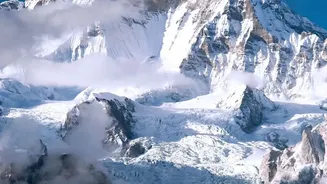
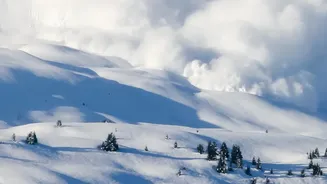
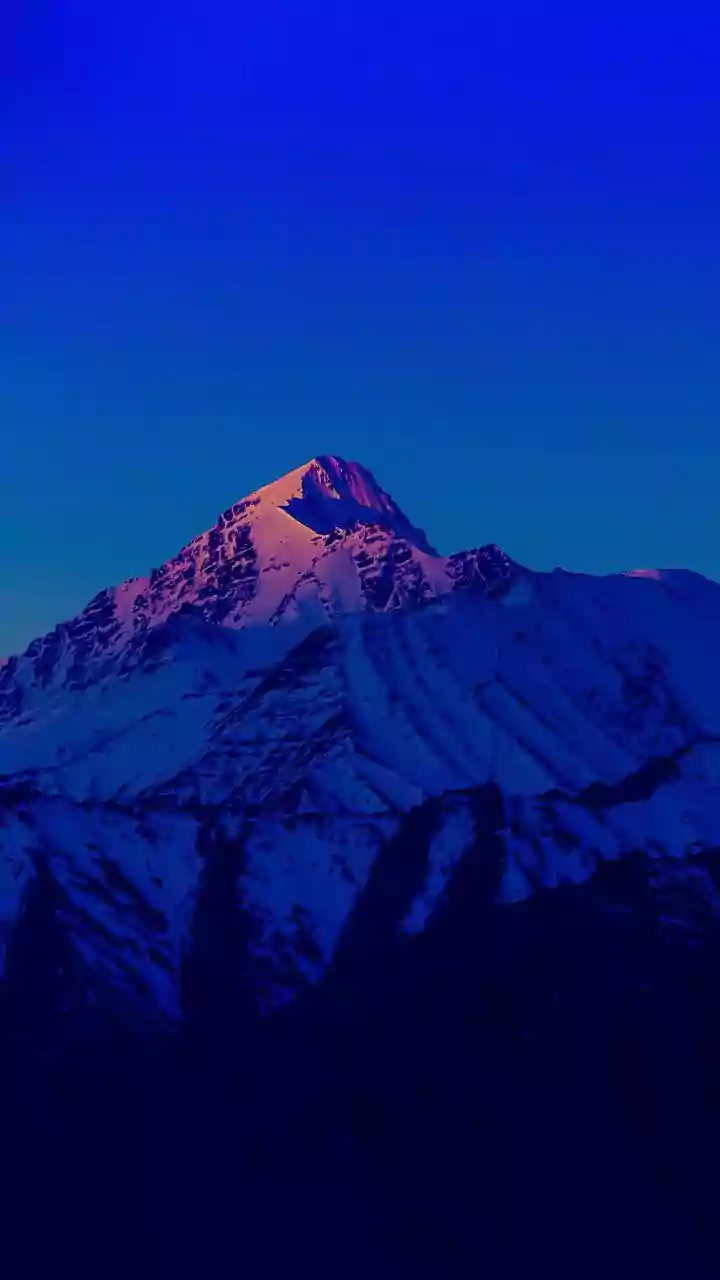
When we think of an avalanche, we typically picture a cascade of fluffy snow. An ice-rock avalanche is a far more formidable event. It begins when a massive wedge of a mountain, often including part of a glacier and the bedrock beneath it, breaks loose
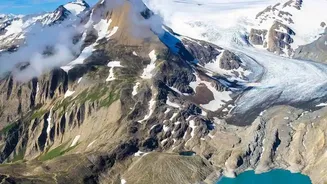
from a steep slope. This can be triggered by the thawing of permafrost—the frozen 'glue' that holds mountain faces together—which is weakening due to rising global temperatures. Unlike a snowslide, this mass consists of millions of cubic metres of solid rock and dense glacial ice, giving it immense destructive power as it hurtles downhill at incredible speed.
A Dam Is Born
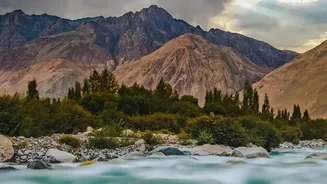
As the ice-rock avalanche descends, it doesn't just slide; it behaves like a fluid. The immense friction and collisions between rock and ice generate intense heat, melting some of the ice and mixing with rock and sediment to form a slurry akin to liquid concrete. When this massive flow of debris reaches a narrow river valley, its sheer volume can be enough to completely block the channel, forming a makeshift, highly unstable dam. Behind this newly formed barrier, the river's water begins to back up, creating a large and rapidly growing lake where there was once a flowing stream.
The Inevitable Breach and a Wall of Water
These landslide dams are not engineered to hold back water. They are loose piles of rock, mud, and ice, making them dangerously fragile. The pressure from the growing lake behind the dam increases with every passing minute. The dam can fail in two main ways: either the rising water overtops the barrier and quickly erodes it, or the water pressure causes the unstable structure to collapse catastrophically. When the dam breaks, it releases the entire volume of the lake in a sudden, violent surge. This event is known as a Glacial Lake Outburst Flood (GLOF), and it unleashes a wall of water that races downstream, carrying with it boulders and debris from the original avalanche.
A Himalayan Reality: The Chamoli Disaster
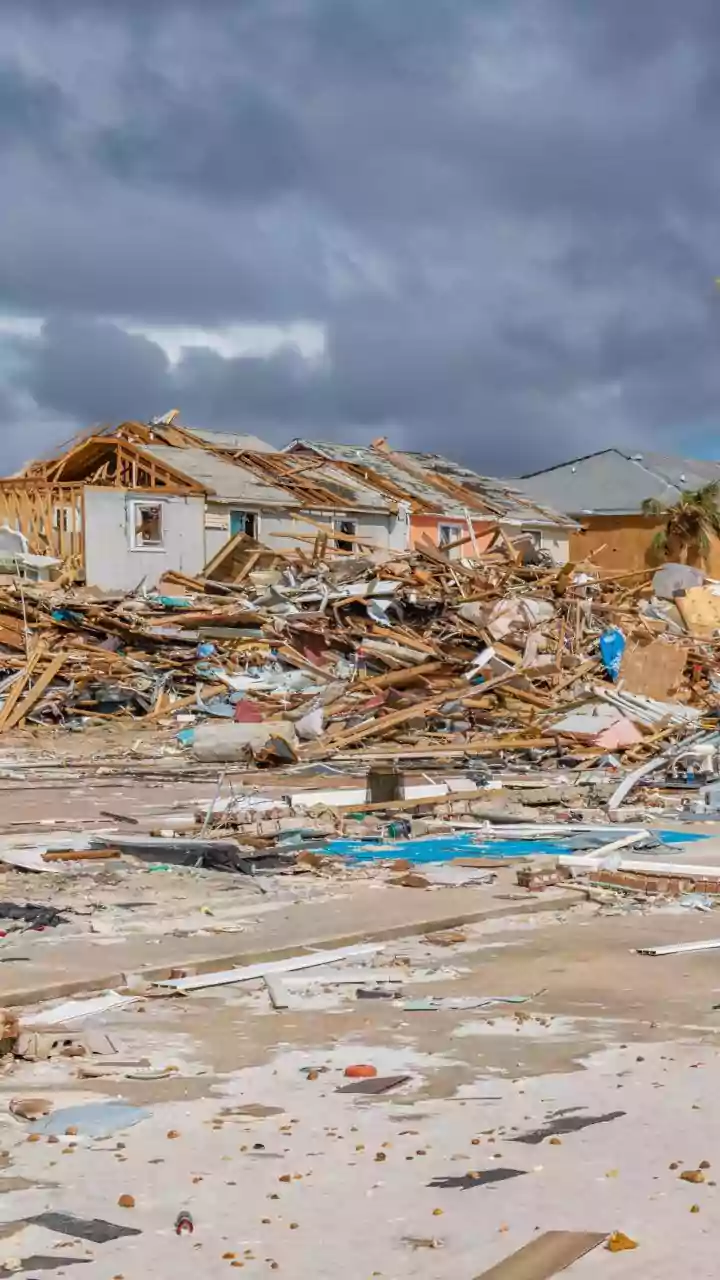
This terrifying sequence of events is not hypothetical. In February 2021, the Chamoli district in Uttarakhand witnessed this exact type of disaster. A massive ice-rock avalanche collapsed from Ronti Peak, sending an estimated 27 million cubic metres of material into the Rishiganga river valley. The event did not immediately block the river to form a large lake but instead transformed into an extraordinarily mobile debris flow that barrelled downstream. The friction from the fall was so intense it melted the ice within the avalanche, adding water to the flow and creating a devastating torrent that destroyed two hydropower projects and claimed over 200 lives. It served as a tragic real-world example of how a high-altitude collapse can lead to destruction miles away.
A Growing Threat in a Warming World
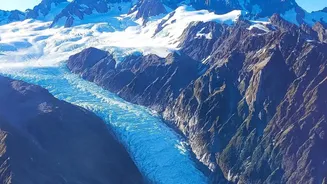
As global temperatures continue to rise, the cryosphere—the frozen parts of our planet—is becoming less stable. Glaciers across the Himalayas are retreating, and permafrost is thawing, increasing the likelihood of these large-scale slope failures. These events pose a significant and growing threat to the millions of people living in mountain regions and downstream along major river systems. Understanding the cascading hazard, from the initial avalanche to the final flood, is the first step toward developing better monitoring and early warning systems to protect vulnerable communities from these increasingly frequent disasters.