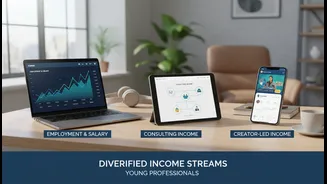










The Dawn of the Portfolio Career
The traditional notion of a single, stable job for life is rapidly becoming a relic for India’s youngest professionals. Born between the late 1990s and early 2010s, Generation Z is pioneering a more fluid and diversified approach to work. Instead of relying
on one employer, they are strategically constructing 'portfolio careers' by combining multiple income streams. This might look like a full-time marketing associate who also works as a freelance graphic designer and manages a small e-commerce store on weekends. This isn't just a trend; it's a structural shift in how an entire generation views financial security and professional growth. Reports show this model is gaining prominence as young Indians seek greater economic resilience in a volatile job market. The rapid expansion of India’s gig economy, projected to engage over 23 million workers by the end of the decade, provides the fertile ground for this new career architecture to flourish.
Necessity and Ambition: The Driving Forces
This embrace of multiple jobs isn’t just about a desire for variety; it's deeply rooted in economic reality. Many Gen Z professionals are entering a workforce where entry-level salaries often fail to keep pace with rising living costs and lifestyle aspirations. Financial anxiety is a significant stressor, pushing many to secure multiple sources of income as a buffer against uncertainty. Beyond the financial pressure, there's a profound generational shift in mindset. Having witnessed the layoffs and career stagnation of previous generations, Gen Z is inherently skeptical of the promise of long-term job security from a single employer. They crave autonomy, flexibility, and control over their career trajectory. Freelancing and gig work offer a direct path to this independence, allowing them to choose their projects and clients.
Upskilling as a Survival Strategy
Continuous learning is the engine powering this new professional model. For Gen Z, upskilling is not a corporate buzzword but a fundamental survival tool. Recent surveys reveal a startling priority shift: a majority of young professionals now value acquiring new skills even more than immediate salary hikes. They are proactively enrolling in online courses on platforms like Udemy and Coursera to master in-demand competencies. The most sought-after skills include artificial intelligence (AI), data analytics, cloud computing, digital marketing, and cybersecurity—areas where demand for talent far outstrips supply. The rise of AI, in particular, is a major catalyst. Instead of fearing replacement, Gen Z is learning to leverage AI tools, with reports indicating that a high percentage are already using AI at work and are eager for more training to stay ahead of the curve.
The Daily Juggle and Its Toll
While the portfolio career offers flexibility and financial potential, it comes with significant challenges. The reality is a demanding juggling act that requires immense discipline and time management. It often means blurring the lines between work and life, with evenings and weekends dedicated to freelance deadlines or side-hustle logistics. This constant 'on' mode can lead to burnout, a common complaint among this generation. Furthermore, the gig economy, while providing opportunities, often lacks the safety nets of traditional employment, such as paid leave, health insurance, and social security. The income from freelance or gig work can be volatile, adding another layer of financial stress despite the multiple revenue streams. The tension between spending on experiences to improve quality of life and the guilt of not saving enough is a common psychological hurdle.
How India Inc. Is Responding
This evolving workforce presents both a challenge and an opportunity for Indian companies. Employers are finding it harder to retain young talent that isn't solely dependent on one salary. To attract and keep Gen Z employees, businesses are being forced to adapt. This includes offering greater flexibility, hybrid work models, and clear pathways for skill development within the organization. Some forward-thinking companies are even creating 'internal gig' opportunities, allowing employees to work on cross-functional projects to gain new skills without leaving the company. Ultimately, organizations that recognize and support their employees' desire for growth and a balanced life are more likely to thrive. They must understand that for Gen Z, a job is just one part of a much larger professional portfolio.