




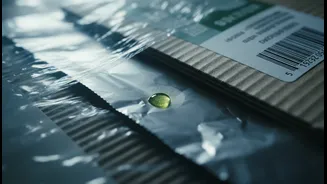
The Hidden Risk in Your Takeaway Box
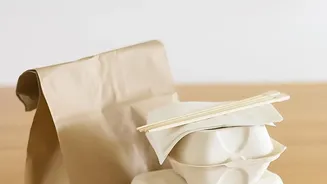
Many of us reuse the plastic containers our food is delivered in, assuming they are perfectly fine for a quick reheat. While a container might be designed to safely hold hot food for serving, that doesn't automatically make it suitable for the high heat of the microwave.
When certain types of plastic are heated, they can release chemical additives into your food. This process, known as leaching, is accelerated by microwave temperatures, posing potential health risks that are easy to avoid. The convenience of popping a container directly from the fridge to the microwave might come at a hidden cost.
Chemicals on the Menu: BPA and Phthalates
The primary chemicals of concern are Bisphenol A (BPA) and phthalates. These substances are often added to plastics to make them more durable or flexible. Health experts and scientific studies have raised concerns that these chemicals are endocrine disruptors, meaning they can interfere with the body's hormonal systems. Exposure has been linked to a range of health issues, including reproductive problems, obesity, diabetes, and developmental disorders in children. Even plastics that are labelled "BPA-free" may contain other chemical substitutes that have not been thoroughly tested for long-term health effects. Fatty and oily foods, common in many Indian takeaways, are particularly prone to absorbing these leached chemicals when heated.
Decoding the Microwave-Safe Symbol
So how can you tell if a container is safe? Most microwave-safe containers will have a specific symbol: usually three wavy lines, sometimes inside a box representing a microwave. It's crucial not to confuse this with the recycling symbol — a triangle with a number inside. While the number identifies the type of plastic, it is not an indicator of microwave safety. As a general rule, plastics with recycling codes #2 (HDPE) and #5 (PP, or polypropylene) are often considered safer for microwave use, but only if they also carry the explicit microwave-safe label. Plastics with codes #1 (PET), #3 (PVC), #6 (PS), and #7 (Other) should generally be avoided for microwaving, as they are more likely to leach chemicals when heated.
When ‘Safe’ Isn’t Safe Enough
Even a container marked as microwave-safe has its limits. The label means it has been tested to withstand microwave temperatures without melting or warping, but it doesn't guarantee zero chemical transfer, especially over time. Scratched, stained, or visibly worn-out plastic containers should be discarded, as damage can increase the rate of chemical leaching. Single-use containers, like those from most takeaways, are designed for just that—one use. Reusing them for repeated storage and reheating can cause them to break down and release more particles into your food. One study found that even some "microwave-safe" containers could release millions of microplastics and billions of nanoplastics when heated.
Smarter, Safer Reheating Habits
The safest approach is also the simplest: transfer your food out of the plastic takeaway container before reheating. Glass and ceramic dishes are excellent choices as they are stable at high temperatures and don't leach chemicals. If you must use plastic, double-check for the microwave-safe symbol and ensure the container is in good condition. To prevent splatters, cover the food with a paper towel or a microwave-safe glass or ceramic lid instead of plastic wrap. Following these simple steps ensures that you enjoy your leftovers just as they were intended—delicious and safe.