






The Hidden Thirst of Technology
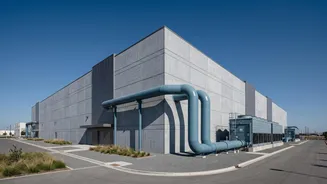
Every time you ask a generative AI to write an email or create an image, powerful servers in a data centre spring into action. These servers, packed with high-performance chips, generate an enormous amount of heat. To prevent overheating and failure,
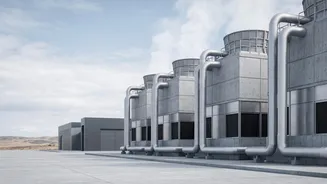
these facilities require constant cooling. While not all data centres use water, a majority of large, modern facilities rely on water-based cooling because of its energy efficiency. This process, known as evaporative cooling, uses water to absorb heat from the hardware, which then evaporates into the atmosphere. The more intense the computation—and AI is among the most intensive—the more heat is generated, and consequently, the more water is needed. This creates a direct link between the growth of AI and the strain on one of our most vital resources.
A Staggering Gallon Count
The numbers behind AI's water consumption are eye-opening. Training a large language model like GPT-3 is estimated to consume around 700,000 litres of fresh water directly on-site for cooling. On a smaller scale, having a conversation of about 20 to 50 questions with an AI like ChatGPT can consume a 500 ml bottle of water. When scaled to billions of queries a day, the volume becomes immense. Tech giants' environmental reports reflect this trend. In 2025, Google's data centres and offices consumed 10.9 billion gallons of water. Some large-scale data centres can use up to 5 million gallons of water daily, a volume comparable to the daily needs of a town of up to 50,000 people. Projections suggest that by 2027, global AI demand could lead to a total water withdrawal of 4.2 to 6.6 billion cubic metres annually.
A Local Problem for India
The global thirst for water to power AI has significant local consequences, particularly for a water-stressed country like India. The nation is a hotspot for data centre investment, with global tech companies committing billions to build new facilities. However, many of these centres are being established in regions already facing water scarcity. India's data centre water consumption is projected to more than double by 2030. For instance, a proposed 1 GW AI hub in Visakhapatnam, a city that already faces a water deficit, has raised concerns among environmentalists. An official government report has cautioned that a large-scale expansion of AI data centres in India could place extraordinary stress on already strained groundwater and freshwater reserves. In response, some companies are opting for air-cooled systems, which use significantly less water and are planned for facilities like the one in Visakhapatnam.
The Search for Sustainable Solutions
The technology industry is not ignorant of this growing problem. Major players are actively investing in solutions to mitigate their water footprint. One of the most promising advancements is the move towards closed-loop, direct-to-chip liquid cooling. These systems circulate a fixed amount of fluid directly to the processors, using virtually no water for cooling during normal operations. Microsoft has reported that its newest AI data centre designs use this zero-water evaporation method. Companies are also improving their Water Usage Effectiveness (WUE), a metric that measures litres of water used per kilowatt-hour of energy. Additionally, many are committing to using reclaimed, recycled, or even harvested rainwater instead of potable water where possible and are investing in water replenishment projects to return more water to local watersheds than they consume. Google, for example, aims to replenish 120% of the freshwater it uses by 2030.