









Meta Plants a Flag in the North
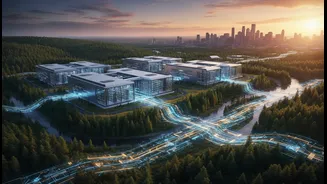
Meta, the parent company of Facebook and Instagram, has broken ground on a colossal AI-optimised data centre in Sturgeon County, Alberta. This facility represents a staggering investment of over C$13 billion and is the company's 33rd data centre globally,
but its first in Canada. The choice of Alberta was strategic, citing access to energy, a strong talent pool, and cooperative community partners. Designed to support Meta's ever-growing AI workloads, the project is expected to create over 3,000 construction jobs and more than 300 permanent operational roles once it comes online in the next few years. This move isn't just about adding capacity; it's about fundamentally rethinking where and how the immense computing power needed for modern technology is located.
The Old Map of the Digital World
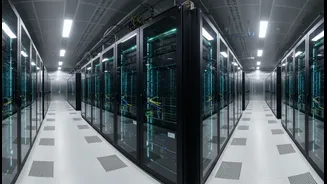
For decades, the world’s data had a few primary addresses. Hyperscale data centres—the stadium-sized facilities that power the cloud—clustered in a handful of key locations. Northern Virginia, often called “Data Center Alley,” is the world’s largest hub, prized for its dense fibre optic connectivity. Other major players included Silicon Valley, Chicago, Phoenix, Dallas, London, and Frankfurt. These areas offered a winning combination of robust connectivity, relatively stable power, and proximity to major population and business centres. The logic was simple: build where the internet’s main arteries converge and where your biggest customers are. But the very success of these hubs has led to their current challenges: they are running out of power, land, and patience from local communities.
AI: The Game-Changing Power Drain
The primary catalyst for redrawing the data centre map is the explosive growth of artificial intelligence. Training and running large AI models requires computing power on a scale that dwarfs traditional internet services. This translates into an insatiable demand for electricity. A single AI data centre can require hundreds of megawatts of power, equivalent to a small city. Traditional hubs, already facing strained electrical grids, simply cannot keep up. This has forced tech giants to embark on a global search for new locations with two key ingredients: abundant land and, most importantly, access to massive amounts of reliable and preferably sustainable energy. The question is no longer just about buying computer chips; it's about securing the power to run them.
The New Frontiers of Data
Meta's move to Alberta is part of a much broader trend of geographic diversification. Companies are now building major facilities in places that were once considered secondary or even tertiary markets. In the United States, states like Texas, Georgia, Ohio, and Tennessee are seeing a surge in data centre construction, attracting investment with available land and power. Globally, the boom is spreading to Latin America, with Querétaro, Mexico, experiencing explosive growth. Emerging markets in Southeast Asia, the Middle East, and parts of Africa are also becoming key targets. These regions offer not only energy and space but also a strategic foothold in rapidly growing digital economies, often supported by government incentives and data sovereignty laws that require data to be stored locally.
A More Distributed Digital Future
This decentralisation of the internet's core infrastructure carries significant implications. For users, it could lead to a more resilient and responsive internet, less dependent on a few single points of failure. For the new host communities, these multi-billion dollar projects promise significant tax revenue and economic development, though debates around energy consumption and water use are common. For India, this global trend offers a powerful parallel. As India aims to become a trillion-dollar digital economy and a hub for AI development, its own data centre capacity is projected to expand dramatically. The challenges and strategies playing out in Alberta, Texas, and Malaysia—balancing power needs, attracting investment, and managing community impact—are the same ones that will define the future of digital infrastructure in India and across the world. The cloud may feel weightless, but its physical footprint is heavier and more widespread than ever.