






A World Within a World
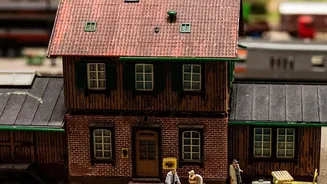
Nestled in the historic Speicherstadt warehouse district, Miniatur Wunderland is officially the world's largest model railway, an honour certified by Guinness World Records. But to call it just a train set would be a profound understatement. It is a sprawling,
impossibly detailed parallel universe built on a 1:87 scale. Across more than 1,600 square meters of exhibition space, you can journey from the dazzling casinos of Las Vegas to the romantic canals of Italy, and from the rugged American West to the snow-dusted Swiss Alps. This miniature cosmos is populated by almost 300,000 tiny figurines, each positioned to tell a story. They inhabit thousands of buildings, drive thousands of cars, and watch as over a thousand trains navigate a complex web of tracks. It's a static marvel of craftsmanship, but it’s the light that truly brings it to life.
The Magic of Day and Night
The true genius of Miniatur Wunderland reveals itself in a cycle that lasts just 15 minutes. Visitors watch as the bright overhead lights slowly dim, simulating a vibrant sunset that gives way to a star-dusted night. In that simulated twilight, the entire character of the exhibition changes. The nearly 500,000 LED lights integrated into the landscape begin to twinkle. Suddenly, the windows of alpine chalets glow with a warm, inviting light, the streets of a miniature Hamburg are lined with working streetlamps, and the headlights and taillights of hundreds of independently moving vehicles cut through the darkness. This recurring day-night transition isn’t just a gimmick; it’s a core part of the storytelling, allowing visitors to experience every scene in two dramatically different ways and revealing details that are invisible in the daylight.
Illuminating Countless Stories
The lighting system does more than just mimic a 24-hour cycle; it creates atmosphere and animates specific events. In the Italy section, Mount Vesuvius periodically erupts, with glowing red LEDs simulating a flow of lava toward the ancient ruins of Pompeii. At Knuffingen Airport, a marvel of miniature engineering, runway lights guide planes toward takeoff while the terminal building bustles with illuminated activity. A vibrant funfair becomes a kaleidoscope of flashing, colourful lights, while elsewhere, the flashing blue lights of police cars signal a tiny emergency in progress. Even the fictional city of Knuffingen has its own distinct nighttime personality. This intricate system is managed by a suite of more than 50 computers, which coordinate everything from the trains to the lighting cues, ensuring the entire world operates in perfect synchrony.
The Technology Behind the Twinkle
The technical challenge of wiring a world of this scale is immense. The creators, twin brothers Frederik and Gerrit Braun, have overseen the installation of hundreds of thousands of individual LEDs, a task requiring immense precision. Much of the technology had to be custom-developed, as off-the-shelf model components couldn't achieve the desired level of complexity and control. Beyond the lights, interactive buttons are scattered throughout the exhibit, allowing visitors to trigger over 200 different actions—from starting a wind turbine to activating a chocolate factory that dispenses a real, tiny bar of chocolate. This layer of interactivity, combined with the dynamic lighting, transforms the viewing experience from passive observation into active discovery, rewarding those who look closely with hidden scenes and charming details.