
The Rocket Revolution in India
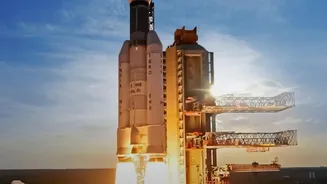
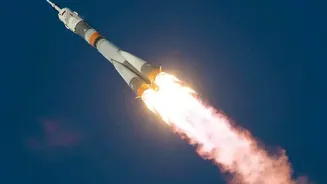
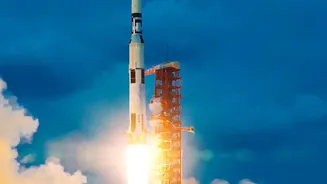
Running from October 4 to 10, World Space Week celebrates key moments in space history, including the launch of Sputnik-1 and the signing of the Outer Space Treaty. This year's 'Rocket Revolution' theme focuses on how modern launch technologies, reusability,
and growing commercial participation are making space more accessible than ever before. India and its space agency, ISRO, are at the forefront of this shift. No longer just a participant, India is now a leader, developing cutting-edge systems that are lowering launch costs and enabling more ambitious missions, from human spaceflight to deep-space exploration.
The Reusability Game-Changer
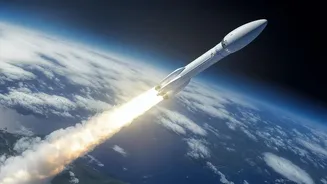
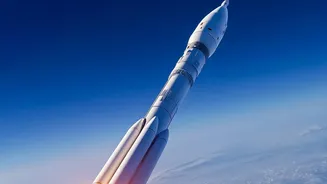
One of the biggest technological leaps for ISRO is the development of Reusable Launch Vehicles (RLV). The goal is to dramatically cut the cost of sending payloads to orbit, potentially by a factor of ten. The star of this effort is the 'Pushpak' RLV, a winged technology demonstrator that looks more like a space plane than a traditional rocket. This vehicle has been undergoing crucial landing experiments, proving its ability to autonomously land on a runway after a mission. While Pushpak is a testbed, the lessons learned are directly feeding into the Next Generation Launch Vehicle (NGLV), a powerful, partially reusable rocket designed to be ISRO's future workhorse. This new class of vehicle will make missions to set up the Bharatiya Antariksh Station and explore the solar system more sustainable.
Powering India’s Human Spaceflight Dream
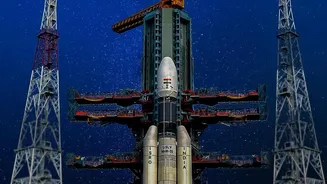
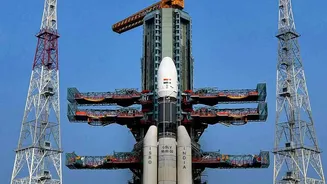
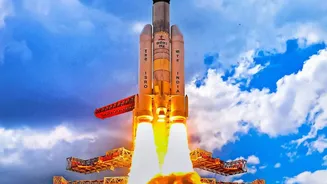
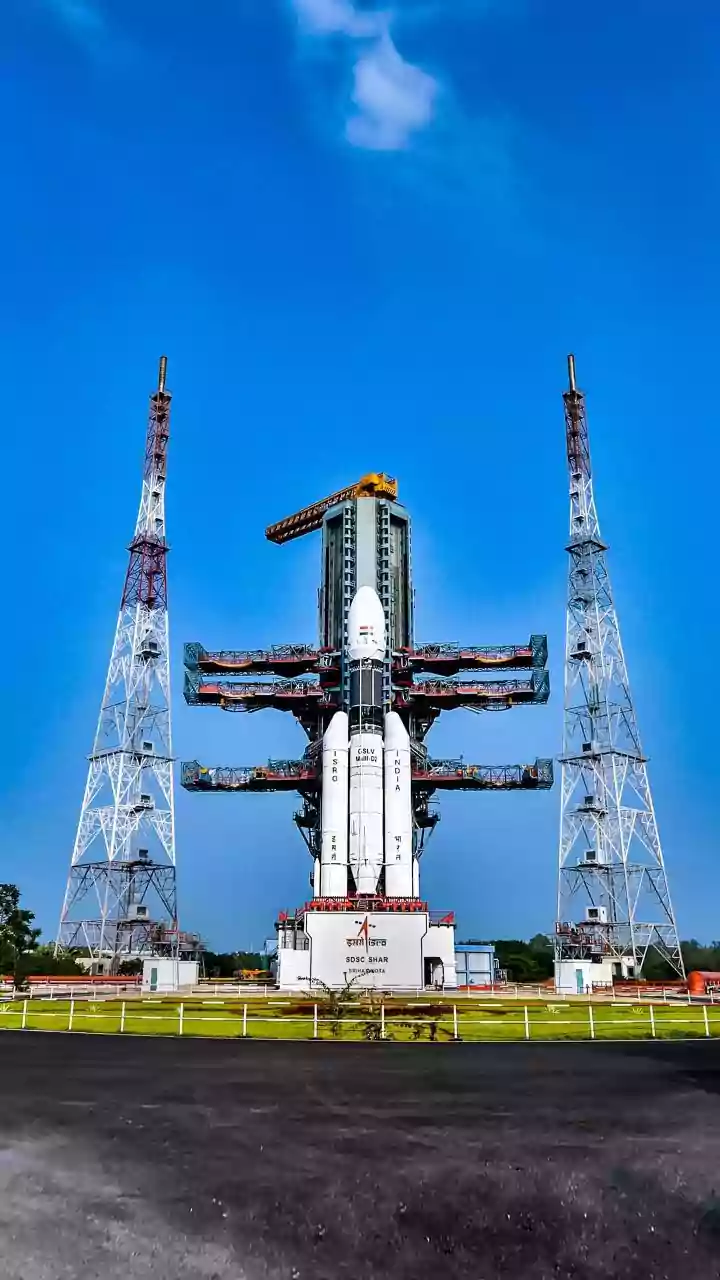
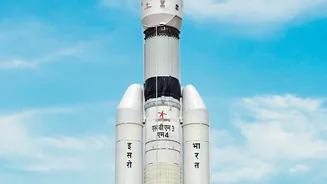
The Gaganyaan mission, India’s programme to send astronauts into orbit, is pushing technological boundaries on multiple fronts. With the first uncrewed flight targeted for late 2026 and the first crewed mission by 2027, the focus is squarely on safety and reliability. The LVM3 rocket has been upgraded to be 'human-rated', featuring a robust Crew Escape System that can pull the crew module to safety in an emergency. The crew module itself is a marvel of engineering, equipped with a life support system to provide an Earth-like environment in space. ISRO officials confirmed in late 2026 that about 95% of the initial phase tests for the programme are complete, marking major progress towards making India the fourth nation to achieve independent human spaceflight capability.
New Frontiers: Moon, Mars, and Beyond
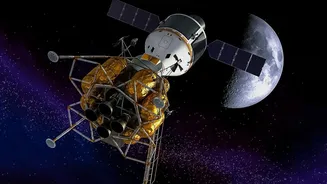
Building on the historic success of Chandrayaan-3, ISRO is already planning its next lunar leap. The Chandrayaan-4 mission aims to be India's first lunar sample-return mission, a complex undertaking that requires multiple technological advancements. This includes developing robotic arms for sample collection and mastering in-orbit docking, which ISRO has been practicing with its SPADEX missions. These technologies are not just for the Moon; they are crucial building blocks for even more ambitious goals, such as a crewed lunar landing by 2040 and the upcoming Mangalyaan-2 mission to Mars. These future missions rely on more powerful and efficient propulsion systems, including advanced semi-cryogenic engines that ISRO is actively developing.
Technology with Terrestrial Benefits
While missions to the Moon and Mars capture the imagination, much of the technology developed by ISRO has direct benefits on Earth. The NavIC system, India's indigenous alternative to GPS, relies on a sophisticated network of satellites and ground receivers to provide precise positioning services. Advances in satellite technology also power high-speed communication, enable better weather forecasting, and support resource management through Earth observation. These innovations are catalysing a burgeoning private space ecosystem in India, with startups and established companies partnering with ISRO to build a robust national space economy projected to be worth over USD 40 billion within the next decade.