







The Unseen Science of Airflow
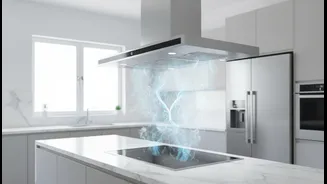
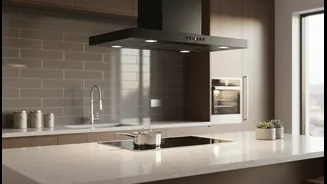
It might seem counterintuitive to run a fan in an empty kitchen, but the logic is all about physics. Turning on your range hood five to ten minutes before you put a pan on the heat creates a gentle but effective airflow pattern. Think of it as establishing
a current. This current ensures that the moment smoke, steam, or grease particles rise from your cookware, they are immediately captured and drawn up into the vents. Waiting until you see smoke means you're already behind; the pollutants have had a chance to escape the fan's immediate capture zone and begin circulating in your kitchen. Starting early creates an invisible 'air curtain' that funnels everything up and out from the very start.
More Than Just Bad Smells
While banishing the ghost of fried fish is a major plus, a kitchen exhaust fan does much more. Cooking, especially on gas stoves or at high heat, releases a cocktail of indoor air pollutants, including particulate matter and volatile organic compounds (VOCs). These invisible particles can impact your home's air quality and even affect your health over time, especially for those with asthma or other respiratory sensitivities. An effective exhaust fan, particularly one that vents outside, is your first line of defense. It captures grease particles before they can settle on your cabinets and walls, reduces excess humidity that can lead to mould, and significantly lowers the concentration of harmful cooking byproducts in the air you breathe.
Your Pre-Cooking Fan Strategy
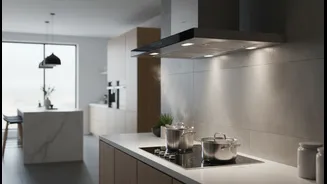
Making this a habit is simple. As you're gathering your ingredients or chopping vegetables, just reach up and switch on the fan to a low setting. This initial step gets the air moving. For most cooking, you'll want to use the back burners, as this is the area most effectively covered by the average range hood. As you start cooking and the heat, steam, or smoke intensifies—like when searing a steak or frying—you can increase the fan speed to match. Don't be shy about using the higher settings; they are there for a reason. The noise might be a minor annoyance, but it's a small price to pay for cleaner air and less cleanup later.
Don't Forget the 'After' Party
Your work isn't done the moment you turn off the stove. Pollutants and odours can linger in the air long after the cooking has stopped. To ensure your kitchen is truly clear, it's best practice to leave the exhaust fan running for an additional 10 to 20 minutes after you’ve finished cooking. This allows the fan to capture any residual steam, heat, and airborne particles. Many modern range hoods even have a timer or auto-shutoff feature to make this step effortless. This final clearing phase is crucial for preventing those stubborn, set-in cooking smells that seem to greet you the next morning.