





The Final Practice Run
On Tuesday, September 29, the four international astronauts of Crew-13 conducted a full-scale simulation of their launch day procedures at Cape Canaveral Space Force Station in Florida. This critical test, known as a "dry dress rehearsal," involves the crew
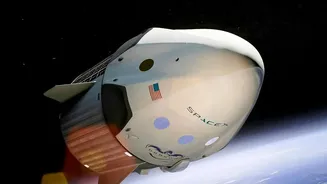
suiting up, performing leak checks on their spacesuits, traveling to the launchpad, and boarding the SpaceX Dragon spacecraft. The term "dry" signifies that the powerful Falcon 9 rocket is not filled with propellant, allowing astronauts and ground teams to meticulously practice every step of the countdown sequence safely. The successful rehearsal confirms that all systems, procedures, and teams are synchronized and ready for the real event.
Meet the Crew-13 Astronauts
A diverse, international team will pilot this mission. The crew is led by NASA astronaut Jessica Watkins, serving as commander, and Luke Delaney as pilot. They are joined by two mission specialists: Joshua Kutryk of the Canadian Space Agency (CSA) and cosmonaut Sergey Teteryatnikov of Russia's Roscosmos. This six-month mission marks the first spaceflight for Delaney, Kutryk, and Teteryatnikov. Watkins, a seasoned astronaut, is making her second trip aboard a Crew Dragon, bringing valuable experience to the flight. The crew arrived at NASA's Kennedy Space Center last Saturday to begin their final preparations for their journey to the orbiting laboratory.
A Mission of Science and Discovery
Once aboard the International Space Station, Crew-13 will become part of the Expedition 75 crew, continuing a long tradition of scientific research in microgravity. Their mission is packed with experiments designed to benefit life on Earth and prepare for future human exploration of the Moon and Mars. The astronauts will conduct studies on human health, including research into Parkinson's disease and heart conditions using stem-cell-derived tissues. Other key research areas include exploring ways to improve food production in space, understanding how microgravity affects blood flow, and testing new medical diagnostic equipment. This work is crucial for ensuring the health and performance of astronauts on long-duration missions.
An Express Trip to Orbit
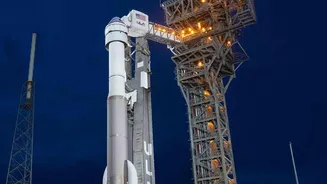
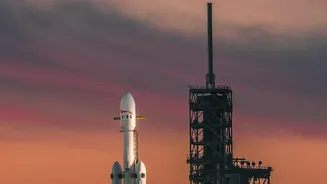
The mission will launch atop a SpaceX Falcon 9 rocket from Space Launch Complex 40. In a remarkable display of efficiency, the Crew Dragon spacecraft is targeting a docking with the ISS in just under eight hours—specifically, about 7 hours and 50 minutes after liftoff. If successful, this will set a new record for the fastest journey by a U.S. spacecraft to the space station. Upon their arrival, the Crew-13 astronauts will be welcomed by the station's current residents and will begin a handover period with the departing Crew-12 astronauts, who are scheduled to return to Earth in early October.
All Eyes on the Launch
With the final rehearsals complete, all that remains is the countdown. Liftoff is scheduled for 11:10 a.m. EDT on Thursday, October 1. As with any launch, the weather will be a deciding factor, with current forecasts showing a 60% chance of favorable conditions. NASA and SpaceX will provide live coverage of the launch and docking, allowing people around the world to witness the beginning of this exciting new chapter of space exploration. The mission represents the 13th crew rotation flight under NASA's Commercial Crew Program, a successful partnership with private industry that ensures continuous human access to the space station.