








The Galaxy's Most Curious Tip
Amidst the vastness of space, Bethesda’s role-playing game Starfield fills its many loading screens with a mix of useful gameplay hints and snippets of lore. While some tips explain the basics of ship combat or outpost building, others are far more esoteric.
None have sparked more curiosity and debate than the oddly specific phrase: “A south-facing window can make sudden rotation more stressful.” It reads less like a gameplay mechanic and more like a line from a deep-space philosophical text or a highly specific psychological report from the 24th century. It’s so peculiar that it stands out, lodging itself in the player's mind. It's a phrase that doesn't seem to correspond to any direct in-game action, leaving many to wonder if it's a forgotten feature, a piece of subtle storytelling, or just a developer's inside joke.
Theories on 'Sudden Rotation'
First, let’s break down the most likely culprit: “sudden rotation.” In the world of Starfield, this could refer to several things. The most obvious interpretation relates to life in zero gravity. Sudden, unexpected rotation of a ship or space station could easily induce vertigo and spatial disorientation. Imagine you’re floating in your cabin, and the entire structure lurches without warning. It’s a recipe for nausea and panic. This phenomenon is a real concern for astronauts, who undergo extensive training to adapt to microgravity environments. Another possibility is that it refers to the high-G forces experienced during intense spaceship maneuvers. In a dogfight, a pilot might execute a rapid turn that subjects the crew to immense physical stress. A sudden change in orientation could be both physically and psychologically jarring, especially for those not accustomed to the rigors of space flight.
Why a South-Facing Window?
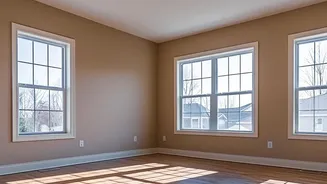
This is where the tip transitions from plausible sci-fi to a genuine head-scratcher. Why would a south-facing window matter? On Earth, the direction a window faces has clear implications. In the northern hemisphere, a south-facing window receives the most direct sunlight throughout the day. This provides light and passive heating, which is why it's a prized feature in architecture and real estate. In space, however, “south” is not a fixed direction. It would have to be relative to a celestial body, like a planet, or a specific navigational point. One theory is that a ship or station might be oriented with its “south” side consistently facing a bright star or the sun. In this case, a south-facing window would be a source of constant, intense light. During a sudden rotation, this brilliant light source would suddenly sweep across your vision, potentially causing glare, temporary blindness, and exacerbating the feeling of disorientation. Instead of a stable reference point, the window becomes a source of sensory chaos.
A Masterclass in Subtle World-Building
While it's fun to speculate about the literal physics, the real genius of this line may not be in its practical application but in its function as world-building. Bethesda games are known for creating immersive environments, and small, seemingly insignificant details are key to that feeling. This tip doesn't need to be a direct instruction to the player; instead, it serves to make the universe feel more lived-in and real. It suggests that the people inhabiting this future have their own unique set of concerns and common knowledge shaped by their environment. It implies there’s a body of science around space habitation ergonomics that characters in the world would understand implicitly. It's the kind of detail that makes the Settled Systems feel less like a game map and more like a place where people actually live, work, and get stressed out by their poorly positioned windows.
The Community's Take
Naturally, the Starfield community has embraced the absurdity and mystery of the phrase. Fan forums and social media are filled with elaborate, and often humorous, theories. Some players have jokingly suggested it’s a reference to space Feng Shui, where the orientation of your living quarters affects your cosmic energy. Others have posited that it’s a sly reference to a quest or piece of lore that has yet to be discovered or was cut from the final game. The discussions themselves have become a part of the game's culture, a shared inside joke among explorers of the starfield. This collective puzzling over a single sentence highlights the power of mystery in game design. By providing an intriguing but ultimately unexplained detail, the developers spark conversation and imagination, allowing players to participate in the act of world-building themselves.